
China Best Customized Menstrual Cup Manufacturer

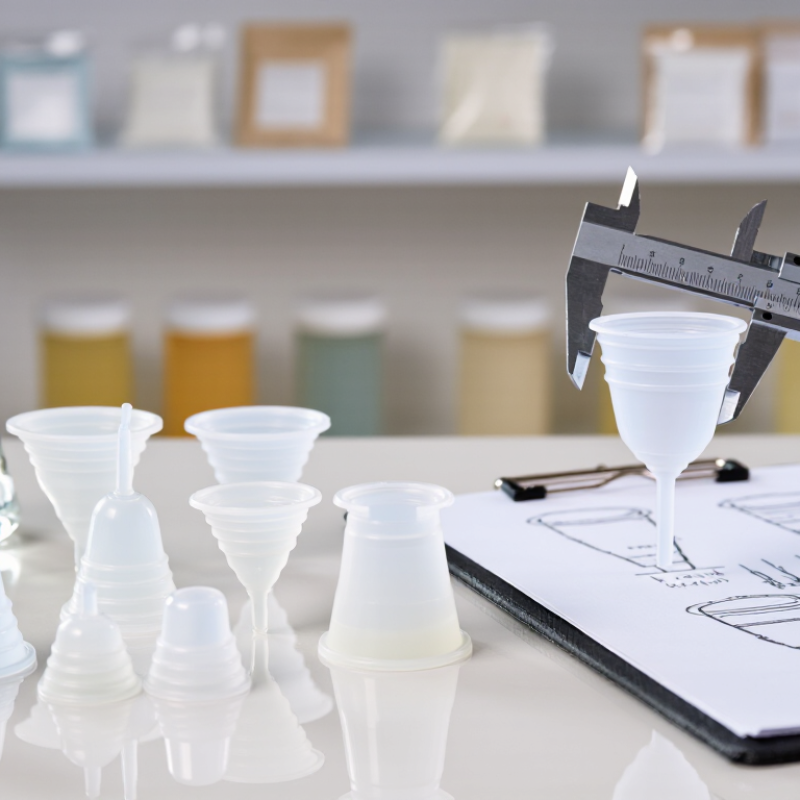
Choosing a China-based manufacturer for a Customized Menstrual Cup involves more than comparing prices or selecting a color. Buyers should examine material specifications, mold precision, sample consistency, and the supplier’s quality-control process. Ask how silicone batches are documented, how product dimensions are checked, and whether production samples match approved designs. Details matter. A cup’s rim, stem, and firmness can affect comfort and usability.

Menstrual-health researcher Penelope Phillips-Howard co-authored a 2019 systematic review of menstrual cups. Its findings support a careful takeaway: menstrual cups can be a safe option, while clear guidance on use and cleaning remains important. That evidence offers useful context, not a substitute for product-specific testing or medical advice. For a manufacturer, responsible development means sharing material information, providing clear care instructions, and avoiding unsupported health claims.

This guide looks at how to assess a Customized Menstrual Cup manufacturer in China, from design discussion to production checks. It covers customization options, sample review, communication, packaging, and questions to ask before placing an order. A logo on a cup is easy to specify. Consistent dimensions and reliable documentation take more care. Even a detailed checklist can miss things, so buyers should verify important claims directly and keep written records of approved specifications.
China Best Customized Menstrual Cup Manufacturer

Menstrual Cup Manufacturing in China: Industry Overview

China’s menstrual-cup manufacturing landscape includes material preparation, molding, trimming, cleaning, inspection, and packaging. For silicone models, buyers should ask how suppliers verify material consistency and control visible defects, such as rough rims or trapped particles. Manufacturing capability can vary between facilities; a polished sample alone does not prove that every production batch will match it. That detail matters.

A 2019 systematic review in The Lancet Public Health covered 43 studies and 3,319 participants. Four comparative studies, involving 293 participants, reported menstrual-cup leakage similar to or lower than other products. The review examined use and acceptability, not Chinese factory performance. It therefore supports product-level context, not claims about any individual manufacturer. Buyers still need batch records and documented inspection criteria.

Tips: Request material documentation, dimensional tolerances, and a sample from a routine production run. Check rim smoothness, stem finish, and packaging seals under bright light. Ask how defects are recorded and addressed. Small marks can be easy to miss. Don’t rely on one sample.

Customization Options for Menstrual Cup Design and Branding

Customization starts with fit and function, not just color. A manufacturer can adjust cup capacity, rim diameter, body length, firmness, and stem shape for different user preferences. Small details matter: a rounded rim may feel different from a firmer one, while measurement marks can help users track flow. Color and logo placement are possible, but pigments and printing methods should be assessed for material compatibility and durability. Packaging can also carry clear sizing guidance, care instructions, and a concise explanation of insertion and removal.

Evidence should guide product claims. A 2019 systematic review in The Lancet Public Health examined 43 studies involving 3,319 participants and found menstrual cups to be a viable alternative to other menstrual products. The authors also noted gaps in evidence for some outcomes. That distinction matters. A custom design should not promise a perfect fit or make unsupported health claims. Pilot testing with users, documented material checks, and feedback on grip or removal can reveal problems before production. Branding is useful, but clarity earns trust. And sometimes, the first design misses something.

China Best Customized Menstrual Cup Manufacturer - Customization Options for Menstrual Cup Design and Branding

Customization Area Typical Options Illustrative Specifications Design and Verification Notes
Product material Silicone elastomer or thermoplastic elastomer (TPE) Material selection depends on the required flexibility, processing method, and target market. Request material composition and relevant biocompatibility documentation for the finished product; suitability should be assessed for the intended use.
Firmness and flexibility Softer, medium, or firmer body; firmness may vary by rim and cup body For silicone, prototypes may be compared across material grades and wall thicknesses; there is no single universal firmness scale for menstrual cups. Evaluate folding, insertion, opening, and comfort with representative users and suitable product testing.
Size and capacity Multiple sizes or capacity options Many designs offer capacities roughly in the 15–40 mL range; actual capacity depends on cup dimensions and measurement method. Specify whether capacity is measured to the rim or to the air holes, and verify the finished product’s dimensions and volume.
Shape and dimensions Bell-shaped or contoured body; different rim profiles and cup lengths Rim diameters around 38–46 mm are common across some product ranges, but size conventions and measurements vary by design. Confirm diameter, total length, usable length, and capacity on approved drawings and production samples.
Rim and air holes Rounded or reinforced rim; air-hole number, position, and size can be designed Hole layout and rim profile are product-specific design features. Check that holes are consistently formed, unobstructed, and easy to clean on finished samples.
Stem design Ball, ring, flat tab, or shortened stem; stem length and texture may be adjusted Dimensions are set according to the cup design and should be checked against the finished usable length. Keep edges smooth and assess whether the stem can be trimmed safely when the product instructions permit trimming.
Color and appearance Transparent, translucent, or selected colors Color availability depends on the material, pigment system, and manufacturing process. Use colorants assessed for the intended product application and verify color consistency and material compatibility.
Surface and measurement marks Smooth finish; optional internal capacity marks or molded measurement lines Measurement markings can be positioned at selected volume intervals if the cup geometry allows. Validate mark legibility and volume accuracy on production-representative samples.
Packaging and printed materials Carton, pouch, storage bag, insert, and user instructions Artwork, language, packaging dimensions, and material choices can be specified for the intended market. Review required labeling, warnings, care instructions, and local regulatory requirements before printing.
Quality checks and documentation Dimensional inspection, visual checks, packaging checks, and agreed test documentation Inspection criteria and sampling plans should be defined in the product specification. Testing and documentation needs depend on the destination market and applicable regulations; no single certification applies universally.

Note: Specifications shown are illustrative industry ranges, not guaranteed specifications. Final dimensions, materials, testing, and labeling should be confirmed for each product and target market.

Materials, Product Safety, and Compliance Standards

A customized menstrual cup should begin with traceable, well-characterized materials. Silicone, thermoplastic elastomer, and other materials need separate assessments; “medical grade” alone does not prove safety. For each material, retain supplier specifications, batch records, and evidence supporting biological-safety testing. ISO 10993-1 provides a framework for evaluating biological risks based on contact and exposure. ISO 14971 helps manufacturers identify and manage product risks. Neither standard is a one-step approval. Small details matter: a rough rim, inconsistent wall thickness, or poorly sealed package can undermine an otherwise sound design. There is room to improve.

Evidence also deserves careful reading. A 2019 systematic review in The Lancet Public Health, by van Eijk and colleagues, assessed 43 studies involving 3,319 participants. The authors noted variation in study quality and reporting, reinforcing the need for clear product-specific evidence. Manufacturers can document dimensions, rim strength, leakage performance, packaging integrity, and cleaning-cycle durability using controlled, repeatable methods. Record failures, not just passing results. Compliance requirements differ by destination market, so verify current testing, registration, labeling, and quality-system obligations before production. A certificate without traceable test records is not enough.

Manufacturing Processes and Quality Control

China Best Customized Menstrual Cup Manufacturer

Manufacturing Processes and Quality Control

Reliable menstrual cup production begins with controlled material selection. Incoming silicone or thermoplastic elastomer should be checked against approved specifications and tracked by batch. During molding, teams monitor temperature, pressure, curing time, and mold cleanliness. Small details matter. After trimming, inspectors examine rim edges, stem finishes, dimensions, and visible defects under consistent lighting. A clean-looking mold can still produce uneven rims when cooling conditions vary.

Samples should undergo leak, flexibility, and dimensional checks, with results recorded for each production lot. Quality systems can draw on ISO 13485 for process controls and ISO 10993-1 for risk-based biological evaluation. These standards guide quality work; they do not replace product-specific testing. Packaging checks also matter: seals must stay intact, lot codes legible, and care instructions readable. Records are useful only when teams act on recurring defects.

A 2019 systematic review in The Lancet Public Health included 43 studies and 3,319 participants. It reported generally reassuring safety findings while noting gaps in the available evidence. That review concerns product use, not factory performance. The distinction matters. Manufacturers still need to verify materials, document process changes, and investigate inconsistent test results rather than dismissing them as sampling noise.

How to Evaluate a Customized Menstrual Cup Manufacturer

China Best Customized Menstrual Cup Manufacturer

How to Evaluate a Customized Menstrual Cup Manufacturer

A customized menstrual cup is more than a shape or color choice. Evaluate the manufacturer’s material controls, mold precision, production consistency, and testing records. Ask for silicone specifications, batch traceability, and inspection criteria for rim thickness, stem finish, and cup capacity. Request samples from different production runs, not just a polished showroom sample. Small details matter.

Evidence matters, too. A 2019 systematic review in The Lancet Public Health examined 43 studies involving 3,319 participants and found menstrual cups to be a viable option, while noting that more high-quality research was needed. This supports careful product evaluation, not blind trust in a supplier’s claims. Ask how customized designs are assessed for leakage, comfort, durability, and clear user instructions. A nice sample can still hide inconsistent production. That is easy to miss.

Tips: Request a written quality plan before approving the mold. Check whether test methods and acceptance limits are documented. Keep one approved “golden sample” for comparison with future batches. If a supplier cannot explain a failed inspection clearly, pause and ask again.

How to Evaluate a Customized Menstrual Cup Manufacturer

Compare the usable capacity stated for each sample size. These indicative ranges reflect commonly marketed cup capacities, not a universal sizing standard; confirm the measurement method and final specifications with each manufacturer.

Capacity ranges are approximate and vary by cup design. Ask manufacturers to document sample capacity, dimensions, material, and quality-control testing before approving a custom design.