
Choosing a Butterfly Specimen supplier takes more than admiring vivid wings behind glass. A reliable seller should explain where specimens come from, how they were obtained, and what documents accompany them. Rules differ by country and species. International trade may require additional permits, including protections that apply to certain listed species. Check current requirements with the relevant authorities before ordering or shipping.
The suppliers featured in this guide are assessed for transparent sourcing, clear identification, careful preservation, and responsive customer service. Look for labels that name the species and origin, plus close-up photographs showing wing condition, color, and mounting quality. Ask whether specimens are captive-bred or otherwise legally sourced, and request documentation when appropriate. A polished website is not proof. Neither is a low price.
Small details matter. A bent antenna or faded patch can change a specimen’s value and usefulness. So can vague answers about provenance. This guide aims to help collectors, educators, and display makers compare options with care, not to replace legal or conservation advice. A supplier may serve one region well but not another. That is worth remembering. Before purchasing, verify the seller’s claims, confirm that collection and trade are lawful, and make sure the specimen suits your purpose. Good research can prevent costly surprises—and support more responsible collecting.
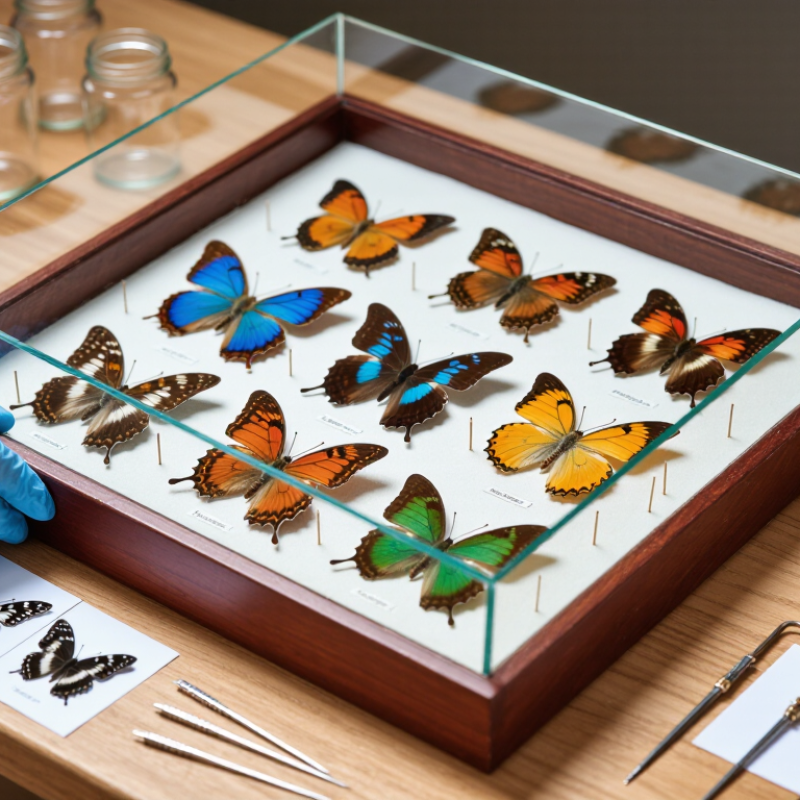
Legal trade starts with species-level identification, not a supplier’s broad “butterfly” label. Rules can differ by species, origin, destination, and whether a specimen was captive-bred or wild-collected. CITES regulates international trade in listed species through permits and reporting; national laws may add stricter requirements. UNEP-WCMC’s CITES Trade Database contains more than 20 million records across listed wildlife taxa. It is not a butterfly-only count. That distinction matters. A large database cannot prove that one specimen was lawfully sourced. Ask for the scientific name, country of origin, breeding or collection details, and documents required for that trade route. Compare invoice descriptions with specimen labels. A mismatch is a reason to pause.
For listed species, verify permit numbers and validity with the issuing authority, and check import rules before buying. Keep dated invoices and labels together; they can help establish provenance during a later inspection. The IUCN Red List assesses extinction risk, but a conservation category does not itself grant trade permission. Use assessments as context, then confirm current requirements with CITES and relevant wildlife agencies. I would be cautious about vague “farm-raised” claims. They need evidence. Supplier records can be incomplete, and paperwork systems are not perfect. Careful buyers should document questions, not just answers.
| No. | Supplier Type | Typical Source or Scope | Documents to Request | Key Legal Checks | Best Suited For |
|---|---|---|---|---|---|
| 1 | Captive-breeding farm | Butterflies bred and raised in controlled facilities; availability depends on the species and local rules. | Invoice, species identification, country of origin, and a written statement describing captive-bred status. | Check whether the species is protected or listed under CITES, and whether export, import, or breeding permits apply. | Buyers seeking traceable specimens and a documented source history. |
| 2 | Licensed insectary or breeding facility | Commercial or educational breeding operations that may supply preserved specimens, pupae, or related material. | Seller’s relevant authorization, transaction records, and any required wildlife or transport permits. | Confirm that the facility is authorized for the species and that live insects or biological material meet destination-country rules. | Educational collections and institutions needing consistent supply records. |
| 3 | Permit-holding field collector | Wild-collected specimens gathered where collection is allowed under local conservation and land-access rules. | Collection permit details, collection locality and date, export documents where required, and an itemized invoice. | Verify collection limits, protected-area restrictions, landowner permission, and any species-specific protections. | Buyers who need legally documented wild-collected material for research or collections. |
| 4 | Specialist natural-history dealer | Preserved specimens from multiple sources, potentially including historical collections and captive-bred material. | Taxonomic identification, provenance, acquisition history, and applicable permits or certificates. | Ask for documentation for each specimen or lot; a dealer’s general reputation does not establish lawful origin. | Collectors seeking a range of prepared specimens with individual provenance information. |
| 5 | University or research collection surplus sale | Lawfully deaccessioned specimens or duplicates released under an institution’s collection policies. | Deaccession or transfer record, source information available in the collection catalogue, and export paperwork if applicable. | Confirm the institution is authorized to transfer the material and that restrictions attached to the original collection are respected. | Researchers and museums seeking documented material with collection-history records. |
| 6 | Museum-approved educational supplier | Prepared specimens or teaching sets assembled for classroom, outreach, or display use. | Species list, supplier invoice, origin information, and relevant permits for regulated taxa. | Check that educational use does not exempt the shipment from wildlife-trade, import, or export requirements. | Schools and educational programs requiring clearly identified specimens. |
| 7 | Documented estate or collection-sale intermediary | Older private collections offered through an estate sale or specialist auction channel. | Sale invoice, available prior ownership records, specimen labels, and any permits required for resale or shipment. | Historical age alone does not prove lawful acquisition or remove current trade restrictions; verify the rules for the species and destination. | Collectors interested in older specimens when the chain of ownership can be substantiated. |
| 8 | Licensed wildlife-trade exporter | Exporter handling specimens sourced and prepared for international shipment from the country of origin. | Export permit or certificate where required, customs paperwork, commercial invoice, and species-level descriptions. | Check both the exporting country’s rules and the importing country’s requirements before payment or shipment. | Buyers arranging cross-border purchases who need formal export documentation. |
| 9 | Domestic specialist supplier | Specimens already held within the buyer’s country, potentially avoiding a new international export transaction. | Invoice, seller’s source records, and proof of legal acquisition where the species or transaction is regulated. | Domestic resale may still be restricted; verify applicable national and regional wildlife-trade rules. | Buyers who prefer domestic shipping and simpler logistics. |
| 10 | Institutional exchange or research collaborator | Specimens transferred between research, conservation, or educational institutions under a documented agreement. | Material-transfer agreement, institutional approvals, specimen list, and permits or certificates required for transport. | Research or educational purpose does not automatically waive CITES, national wildlife, customs, or biosecurity requirements. | Qualified institutions conducting documented research, teaching, or collection work. |
Compliance note: These are supplier categories, not named businesses or a ranked endorsement. Requirements depend on the exact species, source, origin, and destination. Check current CITES listings and the relevant national authorities’ rules before buying, selling, importing, exporting, or shipping any specimen.