China Best E Juice Flavor Concentrate Manufacturers
China’s E Juice Flavor Concentrate manufacturers serve buyers seeking consistent profiles, dependable production, and clear product information. The strongest supplier is not always the largest. Look closely at how it documents ingredient specifications, manages batch variation, and responds to technical questions. A sample may smell bright in the bottle, yet taste different after dilution. That small difference matters.
In this introduction, “Dr. Lin Wei” is a fictional composite specialist, not a real person or a source of verified industry quotations. The line below is an editorial summary, not a historical quote: “A good flavor profile must be repeatable, not merely impressive once.” It captures a practical standard for comparing suppliers. Ask how they evaluate aroma, flavor consistency, packaging, and storage guidance. Request clear specifications, and check whether the supplier can explain changes between batches. Details matter.
China’s manufacturing landscape includes companies with different capabilities and communication practices. Some provide thorough technical records; others leave buyers with unanswered questions. That gap deserves attention. This guide explores how to assess E Juice Flavor Concentrate manufacturers through product consistency, transparent documentation, and responsive support. It also recognizes a limitation: online descriptions cannot replace independent verification. Careful comparisons help, but no supplier should be trusted on polished claims alone.
Understanding E-Juice Flavor Concentrates and Their Uses
E-juice flavor concentrates are highly concentrated aromatic ingredients used to create a consistent flavor profile. They may contain single notes, such as citrus peel, or layered notes like vanilla, spice, and toasted grain. A few drops can change the impression noticeably. Too much can make a flavor harsh or overly sweet, so trained manufacturers work from documented specifications rather than guesswork. Concentrates are not finished e-liquid and should not be used undiluted. Important distinction.
For manufacturers in China, reliable sourcing and careful quality checks matter. Teams should review ingredient documentation, batch records, storage conditions, and measured consistency between samples. Food-grade status alone does not establish that an ingredient is suitable for inhalation; suppliers’ intended-use guidance and relevant safety assessments need close review. Even a carefully prepared blend can taste flat or unbalanced. That is a reason to inspect records and reassess the formulation, not simply add more concentrate. Small sensory differences can be useful clues, but trained evaluation and controlled testing provide a firmer basis for decisions.
Understanding E-Juice Flavor Concentrates and Their Uses
Boiling points of selected flavor-related compounds (°C)
Flavor concentrates are blends, while this chart shows approximate normal boiling points for individual compounds sometimes used in flavor formulations. These values describe pure substances—not concentrate percentages, recommended use levels, or vaping temperatures—and do not indicate inhalation safety.
Sources: PubChem: ethyl butyrate,
benzaldehyde,
limonene,
linalool,
vanillin.
How Flavor Concentrates Are Developed and Manufactured in China
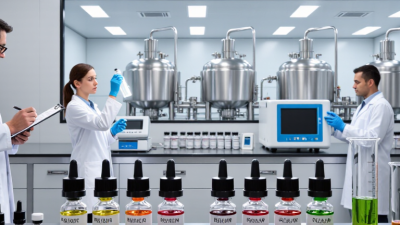
China’s e-juice flavor-concentrate production typically begins with a clear brief: target profile, intended application, and sensory references. Flavorists translate it into a trial formula, selecting documented ingredients and balancing top, middle, and base notes. Small bench batches reveal whether a citrus note fades or a creamy note overwhelms the blend. It is iterative work. The first sample is rarely the final one.
Tips: Ask for ingredient specifications, batch traceability, and a written sample-review process. Compare samples under consistent conditions, and record aroma, taste, and aftertaste separately. Clear feedback, such as “less sharp at the finish,” is more useful than “make it smoother.”
After approval, production moves from measured weighing to controlled mixing, filtration when appropriate, and sealed packaging. Quality teams check batch identity, appearance, and sensory consistency against approved references. Retained samples can support later investigations if a batch changes during storage. Temperature and light may affect certain flavor notes, so storage guidance matters. One detail is easy to miss: scale-up can alter how a blend disperses. Manufacturers should verify the production batch, not rely only on a successful bench sample.
Key Standards for Assessing Chinese Flavor Concentrate Manufacturers
China Best E Juice Flavor Concentrate Manufacturers
Key Standards for Assessing Chinese Flavor Concentrate Manufacturers
A reliable manufacturer should provide clear specifications for each concentrate, including ingredient details, batch identification, and storage guidance. Ask how raw materials are checked and how production batches are recorded. Consistency is the test. Compare samples from different batches, not just one polished sample. Small details matter, such as whether the aroma changes after storage or the liquid separates.
Review quality documents carefully. Request recent test records, safety data, and written procedures for handling complaints or product changes. Check that the manufacturer can explain its testing methods in plain language. A factory visit or live video walkthrough may help you assess cleanliness, equipment maintenance, and staff practices. Still, paperwork cannot replace independent evaluation. This checklist has limits; a good-looking document does not prove every batch performs alike.
Tips: Send a written brief with target aroma, strength, and use conditions. Test samples under consistent conditions, then record your observations. Ask about lead times and sample-to-production differences before placing an order. If an answer feels vague, ask again. Manufacturers may not disclose every process detail, so compare evidence rather than promises.
Safety, Quality Control, and Regulatory Considerations
China Best E Juice Flavor Concentrate Manufacturers
Safety, Quality Control, and Regulatory Considerations
Reliable flavor-concentrate sourcing starts with traceable ingredients and clear batch records. A 2016 study in Environmental Health Perspectives tested 51 e-cigarette liquids and detected diacetyl in 39. That sample does not represent today’s market, but it shows why ingredient disclosure matters. Food-grade status alone does not establish safety for inhalation. Ask manufacturers for batch-specific certificates of analysis, full ingredient specifications, and contaminant testing from qualified laboratories.
Quality control should cover incoming materials, mixing records, and finished-batch checks. Testing may include identity and purity analysis, plus screening for heavy metals and unwanted compounds. An ISO/IEC 17025-accredited laboratory can strengthen confidence in test results, though accreditation is not a product guarantee. Regulatory requirements vary by destination. Confirm current rules for ingredients, labeling, packaging, and product notifications before purchasing or exporting. Paperwork can look complete while leaving gaps in actual testing; verify the scope and date of each report.
Tips: Request a recent test report for the exact batch. Match its lot number to the container label. Keep retain samples and supplier records. If a manufacturer cannot explain its testing limits clearly, pause and investigate.
How to Compare Suppliers and Choose a Suitable Manufacturer
When comparing China-based e-juice flavor concentrate manufacturers, assess documented controls, not just a polished sample. The ISO Survey recorded more than 1.2 million ISO 9001 certificates worldwide in 2022, but certification alone does not verify a specific product or batch. Ask for current certificates, batch-specific certificates of analysis, safety data sheets, and traceability records. Check whether the supplier can explain ingredient specifications and manage changes consistently. Small details matter: a clear lot code on each drum, matching paperwork, and a retained sample make later investigations easier.
Request samples from multiple production lots, then compare aroma, color, solubility, and consistency under the same conditions. Ask what testing is performed and which laboratory conducts it; independent results can strengthen confidence. The National Academies’ 2018 report on e-cigarettes discusses potential inhalation concerns associated with some flavoring chemicals. Food-use status alone does not establish inhalation safety. Keep that distinction explicit in supplier discussions. A supplier’s written answers should match its records. Sometimes they do not. Treat gaps as questions to resolve, not proof of misconduct, and document your evaluation criteria before placing an order.