
Choosing the right Toilet Brush for a business is a small purchasing decision with daily consequences. A brush that looks sturdy in a catalog may wobble in a staff restroom, trap water in its holder, or wear down after repeated use. Those details matter in hotels, offices, restaurants, and other busy facilities. The best choice should fit the room, the cleaning routine, and the people responsible for maintaining it.
Microbiologist Dr. Charles Gerba’s research on microbial transfer offers a useful hygiene principle, paraphrased here: “Cleaning tools need careful handling, too.” For a commercial buyer, that means looking beyond bristle shape. Consider whether the handle gives staff a secure grip, whether the head can reach beneath the rim, and whether the holder allows drainage and airflow. Check replacement-head availability, material durability, and how easily the brush can be cleaned between uses. Small details show up every day.
Not glamorous. Still important. A low-cost brush can become a poor value if it breaks quickly or stays wet in a crowded washroom. Yet a premium model is not automatically the right answer; storage space and staff habits can matter just as much. I would not assume one design suits every business. A café with several compact restrooms may need a different setup from a large office with a dedicated cleaning team. This guide will compare practical brush types, key selection criteria, maintenance needs, and common purchasing trade-offs, so buyers can choose with fewer surprises.
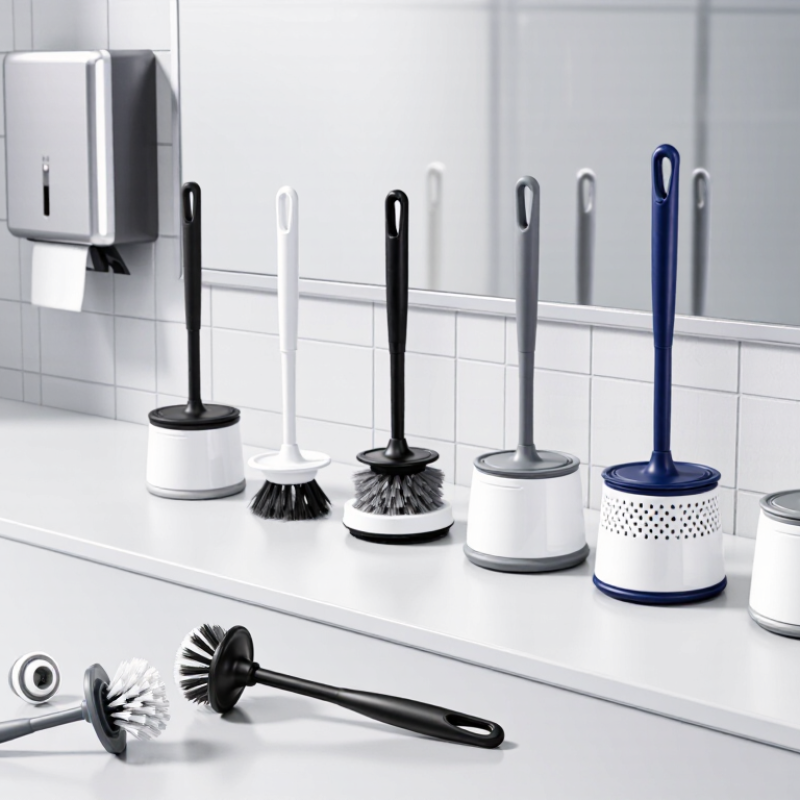
Choosing a toilet brush starts with the restroom, not the handle. Count daily users, check how often staff can clean, and note whether toilets have tight curves or hard-to-reach rims. A busy café restroom may need a brush that dries quickly between rounds. A small office may need fewer replacements, but still benefits from a holder that contains drips. Details matter.
Tips: Inspect the brush after a normal shift. If bristles stay wet, odors linger, or debris remains under the rim, adjust the cleaning routine or choose a design that reaches better. Keep a spare available for replacement. Check the holder too; a closed container can look tidy but trap moisture. Easy to miss.
Match the brush to the surfaces and storage conditions. Stiff bristles can help with stubborn marks, yet may scratch delicate finishes, so confirm the toilet material before standardizing equipment. In humid rooms, ventilation and a ventilated holder can help the brush dry. Track wear for a few weeks, then revise your choice. My first estimate is not always right; restroom traffic changes, and cleaning schedules slip.
A toilet brush should fit the bowl and the cleaning routine, not just look tidy beside it. Traditional round brushes with nylon bristles reach around curved surfaces and can scrub stubborn marks. Narrow or angled heads may reach beneath the rim more easily. Check the handle length, too; a few extra centimeters can keep hands farther from splash zones. Small detail, real difference.
Nylon heads are usually firm and familiar, but they can hold residue if rinsing and drying are rushed. Silicone fins rinse clean more readily, though some designs feel less effective on dried deposits. Plastic handles are lightweight and resist everyday moisture. Metal handles can feel sturdier, but inspect joints and coatings for signs of wear. Replaceable heads may reduce waste, yet only help if replacements stay available.
Holder design affects hygiene between uses. An open holder drains quickly and makes wet bristles easy to spot, but offers less visual concealment. A covered holder looks neater; choose one with ventilation and a removable drip tray, or trapped moisture may linger. For busy washrooms, compare how easily staff can lift, empty, and clean the holder. Test a sample on the actual bowls. A brush that works well on one shape may miss the rim on another. That part is easy to overlook.
A toilet brush is part of a hygiene routine, not a substitute for cleaning and disinfection. The CDC says handwashing can reduce respiratory illnesses by 16–21%, underscoring the value of keeping hands away from contaminated surfaces. Choose a brush with a nonporous handle, a replaceable head, and a holder that allows drainage. A wet brush trapped in a closed cup can smell quickly. It is an easy detail to overlook. Store it away from clean supplies, and assign clear rules for rinsing, drying, and replacement. Cleaning removes soil; disinfection is a separate step when required by the facility’s procedure.
Staff safety matters during routine use, too. A stable, easy-grip handle can reduce awkward wrist movements, while a splash guard helps limit droplets. Train staff to avoid forceful scrubbing and to wear the protective equipment specified for the cleaning product. The Bureau of Labor Statistics recorded 2.4 nonfatal injury and illness cases per 100 full-time-equivalent workers across private industry in 2023; this broad figure is not specific to restroom cleaning, but it reinforces the need for practical controls. Keep brushes visibly labeled by task, and inspect holders for cracks or residue. In busy restrooms, people may skip steps. That is worth planning for. A simple checklist and a reachable replacement supply can make the safe method easier to follow.
Compare brush designs across hygiene potential, maintenance ease, and staff handling safety.
Ratings are qualitative decision-aid scores based on design characteristics, not measured field-test results. Consider replaceable heads for simpler upkeep, and follow your workplace’s cleaning procedures and PPE guidance.
Balancing Durability, Performance, and Total Cost
A low purchase price can hide frequent replacement costs. Compare brush lifespan, cleaning time, and how easily staff can rinse and store each unit. Stiff, closely spaced bristles can help reach under the rim, while a comfortable handle makes repeated cleaning less awkward. Still, no brush works equally well for every bowl or cleaning routine. Test a few in the actual restrooms before ordering in bulk.
Labor deserves a place in the calculation. The U.S. Bureau of Labor Statistics reported a median annual wage of $35,790 for janitors and building cleaners in May 2023. That figure is not a toilet-cleaning rate, but it shows why even small time savings can matter across many fixtures. Track replacement dates and cleaning time for several weeks. A simple log beats guessing. Also check whether the holder drains and dries properly; trapped moisture can make an otherwise durable brush unpleasant to handle.
Tips: Compare total cost per month, not just unit price. Choose replaceable heads only if they are easy to source. Inspect bristles weekly for bending or residue, and keep a spare nearby. Small details matter. A trial may reveal that your “best” option needs one adjustment.
A reliable restroom brush should match the fixtures, cleaning routine, and storage space—not just the purchase price. For standard bowls, choose a head that reaches beneath the rim without forcing the handle against the porcelain. Stiff bristles can lift dried residue, but overly rigid fibers may scratch delicate finishes. Check the handle joint, too. It should feel secure when wet.
Small details matter. A holder needs drainage and enough airflow for the brush to dry between uses. A closed, damp cup can trap odor and soften bristles. In busy restrooms, keep spare brushes and holders in a labeled supply area, then assign checks to a consistent shift. Inspect after peak hours. Staff can look for bent bristles, a loose head, cracks, or lingering odor. Replace a brush when cleaning becomes slower or less thorough, not only when it looks worn. A weekly check is a useful starting point, though traffic and soil levels may call for more frequent inspection.
Use separate brushes for different restroom zones, and rinse each brush before letting it drain. Follow the cleaner’s instructions and your facility’s routine; some products can weaken certain materials. The replacement interval is not universal. I would avoid a rigid calendar if a brush still performs well—but appearance alone can mislead. A brush that looks fine may have loose fibers or a failing connection. Record replacements briefly, then adjust the schedule based on observed wear.