
Choosing Bakery Paper Bags in 2026 is about more than choosing a color or adding a logo. The bag needs to suit the product, the customer, and the way orders are packed. A warm croissant can leave grease marks; a crusty loaf needs room without being crushed. Looks simple. It isn’t always.
Start by considering paper weight, size, handle style, and any grease-resistant lining. A bag that is too thin may tear during a busy morning rush. One that is oversized can let pastries slide around. These small details affect freshness, presentation, and how confidently customers carry their purchases. Still, no single bag works equally well for every bakery. That part is easy to overlook.
Materials and printing deserve careful attention, too. Ask suppliers for specifications and samples, then test them with your actual bread, pastries, and packing routine. Check how the bag feels when filled, whether its base stays stable, and whether the print remains clear. A sample on a desk tells you only so much.
This guide explores practical ways to compare Bakery Paper Bags, from everyday function to appearance and supplier reliability. It also considers trade-offs, including cost, durability, and waste. Some choices may seem obvious until the first crowded weekend. A little testing can prevent an avoidable mismatch.
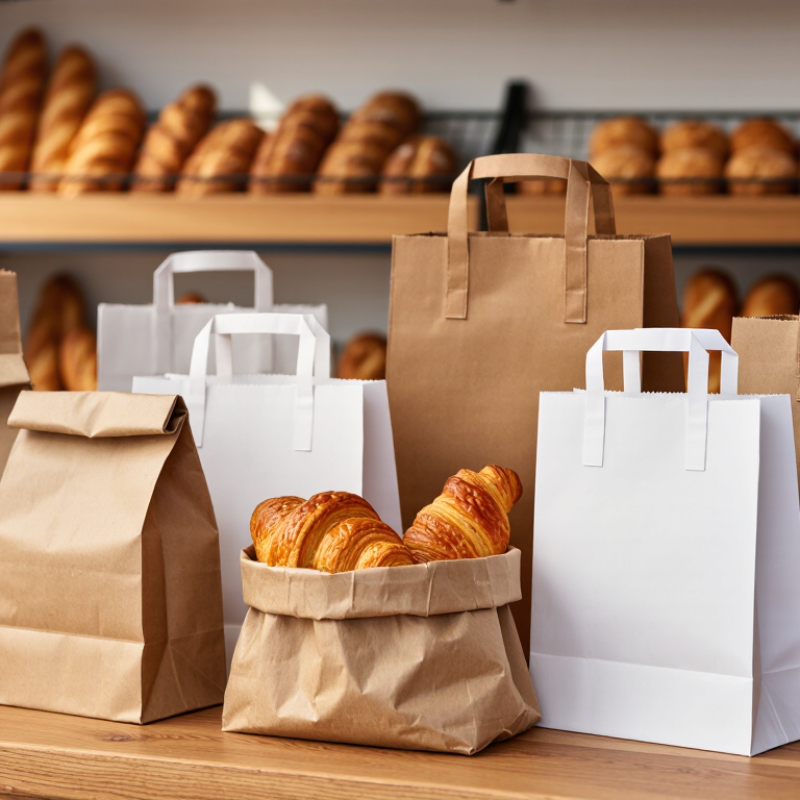
Start with the products customers actually carry out. A crusty loaf needs room to breathe, while a warm cinnamon roll can soften a bag’s base with butter. For greasy pastries, ask suppliers about grease-resistant paper and test it with your own recipes.
Small details matter. A window helps display cookies, but can reduce printable space and complicate recycling in some local systems. Match bag size to typical orders, not your largest order; oversized bags let delicate items slide and crush.
Also consider service conditions. Will staff use bags for quick counter sales, delivery, or several boxed items? Handles help with heavier orders, while a flat-bottom bag can stand upright beside the register. Ask for food-contact documentation and run a simple trial with hot, cold, and oily products.
One test won’t represent every day.
The U.S. Environmental Protection Agency’s 2018 materials report estimated that paper and paperboard containers and packaging had an 80.9% recycling rate. That figure covers all such packaging, not bakery bags specifically, and local acceptance varies.
A paper label alone does not guarantee easy recycling. Check coatings, windows, and disposal guidance before choosing.
Bag choice starts with the food. Lightweight kraft paper suits dry cookies and crusty rolls, while heavier paper handles several pastries better. For warm, buttery items, grease-resistant paper can reduce translucent spots and leaks. But coatings may affect recyclability. Check the bag’s stated food-contact use, not just its color or thickness.
Strength is more than paper weight. A folded bottom, sturdy side seams, and enough room to prevent sharp pastry edges from tearing the bag all matter. Try a few filled bags with your actual products; damp, warm bread can soften paper quickly. Small detail. Test both.
For food safety, ask suppliers for documentation covering intended contact conditions. U.S. FDA regulations 21 CFR 176.170 and 176.180 address paper and paperboard used with certain foods; they do not make every paper bag suitable for every product.
The American Forest & Paper Association’s 2023 data put U.S. paper recycling at about 65%. Still, grease, food residue, and coatings can limit acceptance, so check local recycling guidance.
A neat-looking bag can fail in use. That deserves a real trial.
How to Choose the Best Bakery Paper Bags in 2026?
Choosing the right size starts with the product, not the shelf. Measure the widest pastry and its height, then leave enough room for easy packing. A croissant needs space around its flaky edges; a snug bag can crush it. For a box of cookies, check the filled dimensions, not just the empty box. Too tight is frustrating.
Shape affects both presentation and handling. Flat-bottom bags stand upright on counters and suit muffins, rolls, or small pastry boxes. Slim, gusseted bags work well for baguettes and long loaves. Match the bag’s width to the item so it doesn’t slide around. A little extra room helps, but oversized bags can make delicate pastries look lost.
Tips: Test a sample with your actual product. Check whether the top folds neatly without touching icing or toppings. Choose a fold-over closure for a simple, secure finish; a sticker can keep the fold in place and add a clean touch. Twisted-paper handles suit heavier orders, but they may be unnecessary for a single bun. One detail is easy to miss: staff need to close bags quickly during a rush, so try the closure with one hand before ordering in quantity.
| Bag Style | Example Size (W × Gusset × H) | Suitable For | Practical Closure | Choosing Tip |
|---|---|---|---|---|
| Flat paper bag | 5 × 2 × 8 in (12.7 × 5.1 × 20.3 cm) | A small pastry, muffin, or a few cookies | Fold-over top | A simple option for lightweight items that do not need much side-to-side room. |
| Gusseted pastry bag | 6 × 3 × 10 in (15.2 × 7.6 × 25.4 cm) | Several cookies, croissants, or a small pastry box | Fold-over top or sticker | The side gussets create extra room for bulkier or irregularly shaped products. |
| Windowed gusset bag | 5 × 3 × 9 in (12.7 × 7.6 × 22.9 cm) | Cookies, biscotti, or other products customers may want to view | Fold-over top or adhesive seal | Check that the window material and bag construction are suitable for the intended food-contact use. |
| Long, narrow bread bag | 4 × 2 × 18 in (10.2 × 5.1 × 45.7 cm) | A small baguette, breadstick bundle, or long roll | Fold-over top or paper tie | Match the bag length to the product and leave enough room to close the top without crushing it. |
| Loaf bag | 6 × 3 × 15 in (15.2 × 7.6 × 38.1 cm) | A standard-sized loaf or several rolls | Fold-over top, paper tie, or twist tie | Choose enough width and gusset depth to accommodate the loaf without compressing its sides. |
| Handled carry bag | 12 × 7 × 14 in (30.5 × 17.8 × 35.6 cm) | Multiple bakery items or a lightweight pastry box | Built-in handles; fold-over top if needed | Check the bag’s stated load capacity and base dimensions, especially when carrying boxed items. |
Sizes shown are practical examples, not universal standards. Measure the product at its widest and tallest points, allow room for easy packing, and test a sample bag before ordering in bulk. For warm baked goods, avoid closing the bag tightly while the product is still releasing steam; use grease-resistant paper or a suitable liner for oily items.
When choosing bakery paper bags, start with the food and the local disposal options. Recycled paper can reduce demand for virgin fiber, but it may not suit every warm, oily pastry. Ask suppliers about recycled content, coatings, and whether the finished bag is accepted by nearby recycling or composting programs. Check the details. A coating that helps resist grease may affect disposal, so confirm claims rather than relying on a generic “eco-friendly” label. Test a small batch with your actual products.
Branding should stay legible at a glance. A simple logo, clear type, and one or two colors often work better than a crowded design. Consider how ink coverage affects the bag’s appearance and ask for a printed sample before ordering large quantities. Brown paper can shift colors; pale ink may nearly disappear. The best-looking mockup is not always the best shop-floor choice.
Storage matters just as much as appearance. Measure the widest pastry, including its box or liner, then allow room for easy packing without excessive empty space. Gusseted bags can hold broader items, while flat bags stack neatly for smaller goods. Keep stock dry and away from ovens, sinks, and direct sunlight. Check carton dimensions, too; bulky cases can consume valuable back-room space. A few bags may wrinkle during testing. That is useful feedback, not a reason to ignore the fit.
A low price can look attractive until bags arrive with weak folds, uneven seams, or handles that pull loose. Compare suppliers using the same specifications: bag dimensions, paper weight, handle style, print coverage, and order quantity. Ask for samples. Open and load them with typical pastries, then check whether grease marks show through and whether the base stays firm. Small differences matter.
Request itemized quotes that separate unit price, setup charges, shipping, and any fees for custom printing. A cheaper quote may depend on a larger minimum order, which can leave a small bakery storing cartons for months. Ask each supplier about production time, reorder consistency, and how defects are handled. Get food-contact documentation suited to your intended use, and keep the paperwork with the product records.
Quality is not just paper thickness. A sturdy bag should open easily during a busy morning, fit the product without crushing it, and feel comfortable for customers to carry. Check that printed colors and dimensions match the approved sample. I would not choose a supplier from one perfect sample alone; production batches can vary, and that possibility is easy to overlook. Compare a second sample or a small trial order before committing to a long run.
Compare suppliers on cost, quality, and fit for your bakery. Use the suggested weights below to structure your evaluation.
Suggested buyer-adjustable scorecard weights, not market statistics: compare like-for-like quotes, check food-contact documentation, and test samples for strength and grease resistance before ordering.