
Sofa Feet may look like a minor detail, but they affect a sofa’s height, stability, style, and relationship with the floor. A low block foot gives a different impression from a slender metal leg. Turned wood can make a room feel traditional, while hidden feet keep attention on the upholstery. Small details matter. For furniture buyers, the right choice depends on more than appearance. Consider the sofa’s frame, expected use, cleaning needs, and the surface beneath it. A leg that looks elegant in a product photo may feel too delicate in a busy family room.
This guide explores ten common types, including tapered, bun, block, turned, cabriole, metal, acrylic, and caster feet, along with concealed designs. Each brings practical trade-offs. Casters can help move furniture, but they may not suit every floor or room. Taller feet can make vacuuming easier, yet they change the sofa’s overall height. Looks can mislead. Check the manufacturer’s specifications, attachment method, and care guidance before buying replacement feet. If details are unclear, ask the seller rather than assuming that similar-looking fittings will fit. Even careful research has limits: finishes vary, and a photograph cannot show how a foot feels under daily use. Use these comparisons to narrow your options, then match the final choice to your sofa and home.
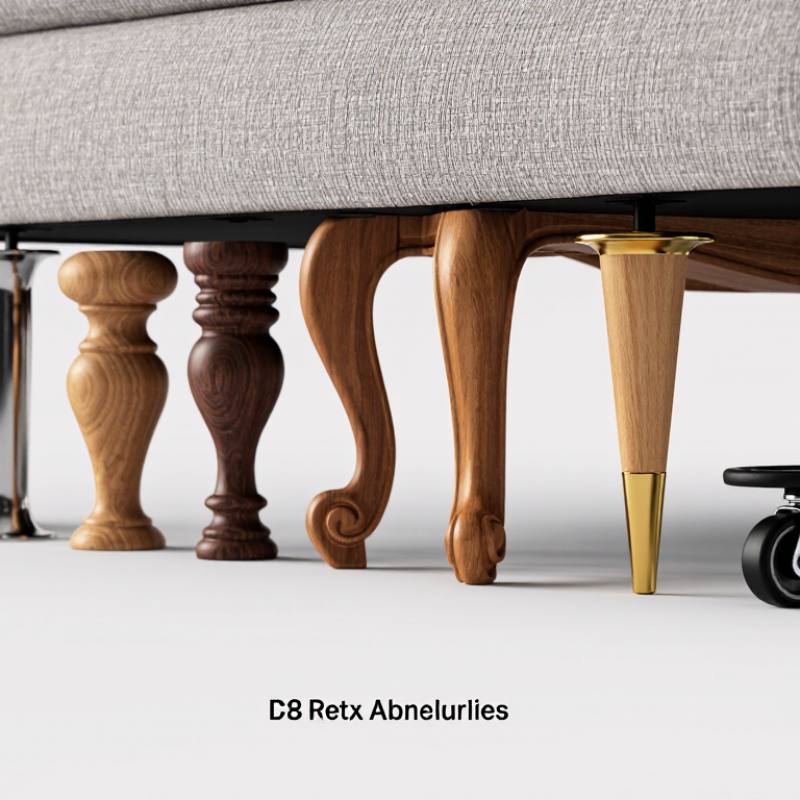
Sofa feet are the contact points between a frame and the floor. They carry the frame, cushions, and people, while keeping upholstery clear of dust and damp surfaces. Their shape also affects stability: short, wide feet spread contact, while narrow or angled feet can concentrate pressure. Small parts matter. A loose screw or uneven foot may cause rocking, squeaks, or stress at a frame joint.
The ANSI/BIFMA X5.4-2020 standard evaluates public and lounge seating with structural and stability tests. It is useful context, but it does not provide one universal load rating for every sofa foot. For a simple estimate, a 180-kilogram sofa-and-occupant load divided across four feet averages 45 kilograms per foot. Real loads vary; a person sitting near one arm can place more force on nearby supports. Check that feet attach securely to reinforced frame points, and use levelers when floors are uneven. Felt pads can reduce scratching, but they do not correct a weak joint. A showroom glance rarely reveals that weakness. Measurements, materials, and fastener quality deserve a closer look.
Sofa feet lift and support the frame, helping distribute its weight to the floor. The chart compares indicative height ranges for common foot styles; actual dimensions vary by sofa design.
Bars show the midpoint of each illustrative range. These ranges are typical examples, not standardized specifications; check the product dimensions and load guidance for a specific sofa.
Top 10 Types of Sofa Feet for Furniture Buyers
Materials, Shapes, and Mounting Styles of Sofa Feet
Sofa feet influence stability, floor clearance, and the room’s overall look. Common styles include tapered, turned, and block-shaped wood feet; bun feet; metal pins; sled bases; and curved, angled, or cabriole designs. Wood feels warm and can be refinished, while metal offers a crisp profile and strong support. Plastic feet are lightweight, but may look less substantial. Shape matters, too: broad feet spread weight, while narrow ones can leave deeper marks on soft flooring.
Mounting style affects replacement and repair. Screw-in feet fit threaded plates or inserts, while bolt-on designs use a plate secured beneath the sofa. Some frames use fixed feet that need more careful removal. Check the attachment, thread size, and frame material before ordering replacements. A foot that looks right may not fit. Measure the existing feet and sofa clearance, then consider how the sofa sits on your floor. This small check is easy to skip.
Tips: Place felt pads under hard feet on wood or tile. For thick carpet, choose feet with enough height to keep the frame clear. Recheck stability after installation; even a slight wobble deserves attention.
| Type of Sofa Foot | Common Materials | Typical Shape | Common Mounting Style | Useful Buying Considerations |
|---|---|---|---|---|
| Tapered wooden leg | Beech, birch, oak, rubberwood, or other hardwood | Wider at the top and narrowing toward the floor; often angled slightly outward | Threaded metal stem screwed into a furniture insert, or a mounting plate secured with screws | A versatile option for many sofa styles. Check the leg angle, height, wood finish, and the sofa’s existing attachment points. |
| Turned wooden leg | Hardwood or engineered wood with a painted, stained, or clear finish | Rounded profile shaped on a lathe, sometimes with rings, beads, or a curved foot | Threaded stem, screw-on plate, or a furniture-specific bracket | Decorative profiles suit traditional and transitional furniture. The narrowest section should still be sturdy enough for the intended load. |
| Square or block leg | Solid wood, laminated wood, or metal | Rectangular or square section, usually straight-sided | Screw-on mounting plate, corner block, or bolts through a reinforced frame | Its broad, simple form can give a sofa a more substantial appearance. Confirm that the frame can support the chosen attachment method. |
| Hairpin metal leg | Steel rod, commonly powder-coated or plated | Slender rod bent into two or three hairpin-shaped legs | Flat top plate fastened with screws to a solid frame or a suitable reinforcement block | Often used for a light, open look. The plate and frame must be suitable for the sofa’s weight; thin upholstery alone is not a secure fixing surface. |
| Straight cylindrical metal leg | Steel, stainless steel, or aluminum | Round tube or solid cylinder, generally vertical | Top plate with screws, a threaded stud, or a manufacturer-specific bracket | Check the tube diameter, finish, foot cap, and load rating. A protective cap can help reduce floor scratching and noise. |
| Flared or splayed metal leg | Steel or aluminum, sometimes with a plated or powder-coated finish | Angled outward from the sofa frame, often with a tapered profile | Angled mounting plate or bracket fastened to the frame | The outward angle affects clearance and overall footprint. Use a mounting plate designed for the angle rather than forcing a straight plate into position. |
| Sled-style support | Steel tubing or formed metal | Continuous bent frame with floor-contacting runners rather than four separate feet | Bolted or screwed brackets connecting the sled frame to the sofa base | Spreads support across a wider area. Verify the connector locations and measure the runner footprint to ensure it fits the room and floor layout. |
| Plinth or recessed base | Wood, plywood, metal, or a combination of materials | Low perimeter base or recessed platform, often concealing individual supports | Integrated into the sofa frame or attached as a structural base with screws or bolts | Creates a low, continuous visual base. Because it is often part of the sofa’s structure, replacement may require model-specific parts or professional fitting. |
| Ball or bun foot | Hardwood, painted wood, or molded polymer | Short, rounded, ball-like profile with a relatively compact floor contact area | Threaded stem, mounting plate, or a screw fixed into a reinforced corner block | Its short height can make a sofa sit lower. Check the foot’s diameter and attachment strength, particularly on heavier furniture. |
| Adjustable leveling foot | Steel threaded stem with a plastic, nylon, or rubberized base | Threaded post with a swiveling or flat floor-contacting pad | Threaded insert or nut fitted into a reinforced sofa frame | Allows small height adjustments on uneven floors. Confirm thread diameter, available adjustment range, and that the sofa frame has a compatible insert. |
Fit and safety note: Sofa feet are not universally interchangeable. Before buying replacements, check the attachment type, thread size, leg height, mounting angle, floor clearance, and the sofa frame’s condition. Follow the furniture maker’s load and installation guidance where available.
Tapered wooden feet create a light, mid-century look and offer stable support when securely fitted. Turned wood feet add rounded details, while block feet suit clean, modern shapes. Bun feet are short and curved, often giving traditional sofas a grounded appearance. Cabriole feet feature an outward curve and work best with classic, decorative frames. Hairpin metal feet look slim and airy, but may feel less warm against a soft, textured sofa. Small detail. Big effect.
Straight metal legs are simple to clean and provide a crisp profile. Sled feet join two supports with a horizontal bar, helping distribute weight across the floor. Acrylic feet appear nearly invisible and keep a room feeling open, though scratches can show clearly. Concealed feet hide beneath the frame for a low, floating look. Caster feet allow easier movement, but wheels should lock to prevent unwanted shifting. A stylish foot is not automatically the most practical choice; floor type and sofa weight matter.
Tips: Check the attachment plate, screw size, and stated weight capacity before buying replacements. Measure the sofa’s current height, too. Even a small change can make sitting or standing less comfortable. On wood or tile floors, use suitable protective pads; they can reduce scratches and noise. I have found that appearance is easy to judge, but stability takes a little testing.
Top 10 Types of Sofa Feet for Furniture Buyers
How to Choose Sofa Feet for Style, Comfort, and Stability
Sofa feet influence more than appearance. They affect seat height, floor protection, and how firmly a sofa sits. Common choices include tapered wood legs, square blocks, turned feet, metal rods, and low plinth-style bases. Each creates a different visual effect. Slim legs feel lighter in a small room, while broad feet can suit a heavier sofa. Wood often adds warmth; metal can look crisp and modern. Still, matching a room’s style is not enough. A beautiful leg can wobble if its fitting does not suit the sofa frame.
Check the sofa’s existing attachment points before buying replacements. Measure the current feet and compare their height, width, and fixing method. Raising a sofa by even a small amount may make standing easier, but it can also change how your knees meet the seat. Stability matters, too. Look for feet that sit evenly on the floor and support the sofa’s load; uneven flooring may need adjustable glides. I once assumed wider feet always felt steadier. They did not on a soft rug.
Tips: Place a sample foot on the floor and press gently on the sofa’s corners. Check for rocking. Add felt pads on hard floors, and confirm the feet do not catch rug edges. If children or pets use the sofa, inspect the fittings after installation. Keep the original feet until the new ones have passed a real-world test.
Sofa feet affect more than appearance. Tapered wood legs can lift a low sofa, while metal feet may suit a cleaner, sturdier look. Before buying replacements, turn the sofa carefully and inspect how each foot attaches. Measure the fitting, including bolt diameter and length, or note whether the sofa uses a mounting plate. A leg that looks right may still have the wrong thread. Check the sofa’s care instructions when available, especially for modular or reclining designs.
Replacing feet takes patience. Remove one at a time, keeping the sofa supported on a stable surface. Compare the old and new fittings before tightening anything. Hand-tighten threaded feet first, then secure them gently; forcing a mismatched bolt can damage the frame. I might be tempted to choose the tallest option for extra clearance, but that can make some sofas less stable. Check that all feet sit level and that weight is distributed evenly.
Tips: Recheck the fittings after moving the sofa or a few weeks of use. Wipe feet clean, look for cracks or looseness, and add suitable floor pads to reduce scratches. If a mounting point feels stripped or the frame shifts, stop and get the fitting assessed rather than relying on a quick fix.