
Choosing the right Hotel Soaps And Shampoos is more complex than selecting attractive bottles. Guests notice scent, texture, packaging, and performance within seconds. A harsh soap can leave tight skin after one shower. A weak shampoo may feel disappointing, even in an expensive suite.
Hospitality analyst Bjorn Hanson has observed, “The bathroom is one of the most important areas in a hotel room.” That detail deserves attention. Hotel teams must examine ingredient quality, skin sensitivity, fragrance strength, dispenser design, supplier reliability, and overall value. A citrus scent may feel fresh in a beach resort, but it could seem unsuitable in a quiet business hotel. Small choices shape the guest’s memory.
No checklist is perfect. Preferences differ.
These 10 tips offer a practical starting point for evaluating Hotel Soaps And Shampoos. They consider real operating conditions, including housekeeping routines, refill efficiency, bathroom humidity, and guest expectations. A product that looks premium may still waste time if its pump clogs. A low-cost formula may also create complaints when it dries the skin or leaves residue on tiles.
The best selection balances comfort, safety, consistency, and brand identity. It should perform well across different seasons and guest profiles. Testing samples in real hotel bathrooms is wise. So is asking staff for honest feedback. Their hands handle every bottle, towel, and dispenser.
There will always be compromises. Fragrance, sustainability, cost, and luxury do not automatically align. Careful evaluation helps hoteliers make fewer expensive mistakes and create a cleaner, more memorable bathing experience.
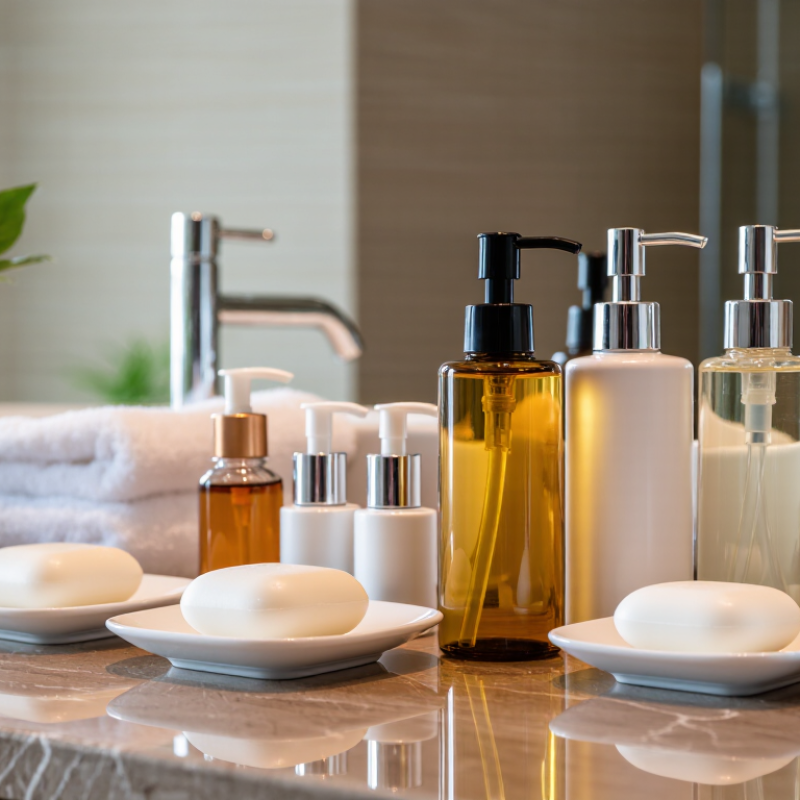
Hotel soap and shampoo should begin with purpose, not fragrance. Define the guest, room type, usage volume, and service promise. A family resort may need gentle, tear-conscious formulas. A business hotel may prioritize quick rinsing and compact packaging. Set minimum standards for pH, microbial safety, ingredient traceability, and consistent fill weight. ISO 22716 provides recognized good manufacturing practice guidance for cosmetic production. It does not replace local safety requirements or documented product assessments.
Use evidence before choosing sensory claims. Booking.com’s 2024 Sustainable Travel Report surveyed more than 31,000 travelers across 34 countries. It found that 75% wanted more sustainable travel choices. This supports refillable dispensers, reduced-plastic packaging, and concentrated formulas, but guest acceptance still needs testing. A 2018 Nature Climate Change study estimated tourism caused 8% of global greenhouse-gas emissions. Bathroom amenities are not the whole problem. They still create visible waste daily.
Check supplier audits, batch records, stability results, preservative performance, allergen communication, and complaint response times. Test products on wet hands, not only in laboratory cups. Measure foam, rinse speed, scent persistence, leakage, and dispenser usability. Keep accessibility in mind; stiff pumps frustrate guests with limited grip. Do not confuse “natural” with safer. A perfect formula does not exist. I would review feedback after launch, because a compliant product can still feel drying, cheap, or wasteful. That uncomfortable feedback is useful.
Choosing hotel soaps and shampoos requires more than attractive packaging. Compare the full ingredient list, not only “natural” claims. Fragrance, essential oils, dyes, and strong preservatives may irritate sensitive skin. A fragrance-free formula can reduce one concern, but it is not automatically allergy-proof. The American Academy of Dermatology recommends patch-testing unfamiliar products, especially for guests with eczema or allergies. Hotel buyers should request safety data, stability records, and dermatological testing from suppliers.
Tip 1: Check formula suitability. A mild cleanser should avoid excessive sulfates and use balanced surfactants. Shampoo should clean without leaving hair rough or coated. A near-skin pH may support comfort, although pH alone proves little. Tip 2: Review preservatives carefully. Microbial protection is essential in water-based products, particularly refillable dispensers. Poorly controlled systems can create contamination risks. The FDA states that cosmetic manufacturers are responsible for product safety before marketing, so hotels should demand documented quality controls.
Tip 3: Compare guest-use evidence. NielsenIQ’s 2023 State of Sustainability report found that 78% of consumers consider sustainable living important. Smaller packaging may reduce waste, yet dispensers require strict cleaning and inspection. Tip 4: Make accessibility practical. Clear labels, sealed units, and readable ingredient lists help guests make safer choices. Avoid promising “hypoallergenic” without supporting testing. I would also review complaints monthly. A formula that looks elegant in procurement files may still sting after shaving, and that feedback matters.
| Tip | Evaluation Dimension | What to Compare | Preferred Characteristics | Guest Safety Considerations |
|---|---|---|---|---|
| 1 | Ingredient transparency | Full ingredient list, ingredient order, allergen declarations, and product documentation. | Clearly labeled ingredients using recognized cosmetic ingredient names, with batch and shelf-life information available. | Transparent labeling helps guests and staff identify potential allergens, irritants, and ingredients that may conflict with personal sensitivities. |
| 2 | Surfactant system | Primary cleansing agents in soap and shampoo, including anionic, amphoteric, and nonionic surfactants. | Mild systems that combine effective cleansing with lower potential for excessive dryness; amphoteric surfactants can help moderate cleansing harshness. | Very strong or highly concentrated cleansing systems may increase dryness or irritation, especially for frequent users or guests with sensitive skin. |
| 3 | Skin and scalp pH | Measured pH of the finished formula rather than relying only on marketing language. | For facial and body cleansers, a mildly acidic or skin-compatible range is generally preferable. Shampoos are commonly formulated around mildly acidic to near-neutral conditions. | Products with an extremely high or low pH may disrupt the skin barrier or cause stinging. A supplier should provide finished-product specifications. |
| 4 | Moisturizing support | Humectants, emollients, and conditioning ingredients such as glycerin, panthenol, fatty alcohols, or suitable plant-derived oils. | Balanced formulas that cleanse without leaving excessive tightness, roughness, or residue. | Moisturizing ingredients can improve comfort, but heavily fragranced or complex formulas may still be unsuitable for guests with reactive skin. |
| 5 | Fragrance and essential oils | Fragrance intensity, fragrance allergens, essential oils, and availability of fragrance-free alternatives. | Light, unobtrusive fragrance with documented allergen information; fragrance-free options are useful for sensitive-guest rooms. | Fragrance materials and some essential-oil components can trigger contact sensitivity in susceptible individuals. Avoid making “natural” synonymous with “hypoallergenic.” |
| 6 | Preservation and microbiological control | Preservative system, product water content, packaging design, and microbiological test results. | Preservation appropriate to the formula, supported by stability and preservative-effectiveness testing where applicable. | Water-based products can support microbial growth if inadequately preserved or contaminated. Do not use products with altered odor, color, texture, or visible contamination. |
| 7 | Formula type and dispensing format | Bar soap, liquid refill, sealed mini container, wall-mounted dispenser, or single-use sachet. | Choose formats that limit hand contact, prevent water entry, and support hygienic housekeeping procedures. | Refillable systems require controlled cleaning, documented refill procedures, and protection against cross-contamination. Sealed packaging provides clearer product traceability. |
| 8 | Allergy and sensitivity profile | Common sensitizers, dyes, preservatives, nut-derived ingredients, gluten-related concerns, and fragrance components. | Maintain a simple-ingredient or sensitive-skin option and provide accurate product information on request. | “Hypoallergenic” is not a guarantee that a product cannot cause a reaction. Guests with known allergies should review the ingredient list and follow medical advice. |
| 9 | Safety, quality, and regulatory records | Safety data, stability testing, batch traceability, manufacturing controls, and applicable cosmetic compliance documentation. | Suppliers able to provide current specifications, certificates of analysis when appropriate, recall procedures, and clear storage guidance. | Quality records help hotels respond quickly to complaints, adverse reactions, damaged packaging, or suspected product contamination. |
| 10 | Performance and sustainability balance | Rinseability, foam level, residue, water usage, packaging weight, recyclability, and concentrated-formula options. | Products that rinse cleanly, perform consistently in the local water conditions, and use durable, appropriately sized packaging. | Environmental claims should be supported by specific information. Avoid sacrificing label clarity, product stability, or guest safety for reduced packaging alone. |
10 Tips for Choosing Hotel Soaps and Shampoos
Packaging often shapes a guest’s first impression. I once opened a neat-looking bottle with a stubborn cap and wet hands. It felt careless. Choose containers that are easy to grip, clearly labeled, and sealed against leaks. Recycled or lightweight plastic can reduce material use, but durability still matters. A cracked bottle creates waste and frustrates housekeeping teams.
Dispensing systems deserve practical testing. Wall-mounted pumps usually reduce discarded miniatures, yet placement affects comfort and accessibility. Guests should reach the dispenser without stretching or bending awkwardly. Check whether one pump delivers enough product, especially for thick shampoo. A weak mechanism encourages repeated pressing. That increases consumption. Refill systems need secure closures, visible fill levels, and cleaning procedures between refills. Do not trust a sustainability claim without checking its actual operation.
Environmental impact extends beyond the package. Review ingredient choices, transport weight, water use, and disposal options. Concentrated formulas may reduce shipping volume, but they require careful dilution and staff training. “Compostable” packaging can sound impressive, yet local waste facilities may not process it. That is easy to overlook. Ask suppliers for credible lifecycle information and consistent quality records. Compare guest feedback with housekeeping observations, because a solution that looks efficient may create hidden labor. Reassess the system after several months, and admit when a convenient choice produces more waste than expected.
Evaluation score from 1 to 5, where 5 represents the strongest performance.
Refillable wall dispensers generally reduce packaging waste and improve product control, while large recyclable bottles offer a practical balance between guest familiarity and material efficiency. Single-use mini bottles provide convenience but typically create more packaging waste per guest stay. Scores are based on a transparent 1–5 purchasing framework covering packaging, dispensing performance, operations, and environmental considerations.
Hotel toiletries should reflect the property’s character, not simply fill a bathroom shelf. A luxury hotel may need richer shampoo, elegant packaging, and a subtle fragrance. A budget hotel should prioritize reliable cleansing, sensible sizes, and easy replacement. Boutique properties can choose unusual textures or local-inspired scents, but those choices must remain comfortable for most guests.
Tip: Match the product experience with the room rate, design, and service level.
Guest expectations vary more than many managers assume. Families often prefer gentle formulas, practical pump bottles, and products suitable for different ages. Business travelers may value compact packaging and fast, mess-free use. International guests can appreciate clear ingredient lists and fragrance options. Test products with housekeeping staff before purchase. They notice leaks, clogged pumps, and difficult dispensers quickly.
Tip: Review guest comments, not only supplier descriptions.
Brand identity should guide presentation, while reliability should control the final decision. Choose consistent colors, readable labels, and packaging that survives daily handling. Refillable dispensers may reduce waste, but only when cleaning procedures are documented and followed. Otherwise, the sustainable choice can create distrust. A common mistake is selecting a fashionable scent without checking ventilation and guest sensitivities. It may smell pleasant in a showroom, yet feel overpowering in a small bathroom.
Tip: Run a short trial, record complaints, and adjust the range before full installation.
Start with the complete cost, not the unit price. Include dispensers, shipping, storage, replacements, and staff handling time. Compare the cost per occupied room, not merely the cost per bottle. A cheaper soap may create higher waste through leakage or excessive packaging. Request samples and test lather, scent strength, rinsing speed, and skin comfort in real bathrooms. Ask housekeeping staff for honest feedback after several cleaning cycles. Their experience often reveals problems that product sheets miss.
Check ingredient lists and confirm suitable quality documentation. Products should match your guests’ expectations and your property’s water conditions. Review minimum order quantities before signing anything. Small hotels can lose cash when inventory moves slowly. Confirm production timelines, delivery terms, and emergency replacement procedures. Ask whether the supplier can maintain the same formula and packaging over time. Consistency matters when guests return and notice changes. Also inspect cartons on arrival, including seals, labels, and expiry information.
Test supplier communication before placing a large order. Send practical questions and measure response clarity, not just speed. A reliable contact admits limitations and records corrective actions. Our first forecast was too optimistic; seasonal occupancy changed the order size. Build a modest buffer, but avoid storing years of stock. Review guest comments, consumption rates, and damage reports every quarter. Recalculate value when prices, room occupancy, or packaging regulations change. Sometimes a slightly higher-priced product performs better and reduces complaints. Still, “premium” does not automatically mean better. Check the evidence.