Who Are the Top Cosmetics Packaging Suppliers in China?
Choosing a Cosmetics Packaging supplier in China requires more than comparing prices or browsing polished product photos. A glass jar may look elegant under showroom lights, yet its cap can loosen during transit. A soft-touch coating may feel premium but show fingerprints quickly. These details shape customer trust.
Design expert Paul Rand once wrote, “Design is the silent ambassador of your brand.” His observation applies closely to cosmetics packaging: the container speaks before the formula is tried. Still, design cannot replace engineering. Buyers should ask about material options, mold ownership, minimum order quantities, decoration methods, and production lead times. Request samples, then check closures, surface finish, and compatibility with the intended formula. A sample is only a starting point.
This guide examines Chinese suppliers through practical criteria, including product range, customization, quality controls, and communication. It also considers how suppliers handle small test orders and repeat production. Those questions matter. A supplier’s attractive catalog does not, by itself, prove consistent manufacturing. I would be cautious about treating one successful sample as a guarantee; real production can reveal flaws that a showroom piece hides. Compare evidence, clarify specifications in writing, and ask how defects are handled. The best fit is not always the largest factory or the lowest quote. It is the partner that can explain its process clearly—and show that it can repeat it.
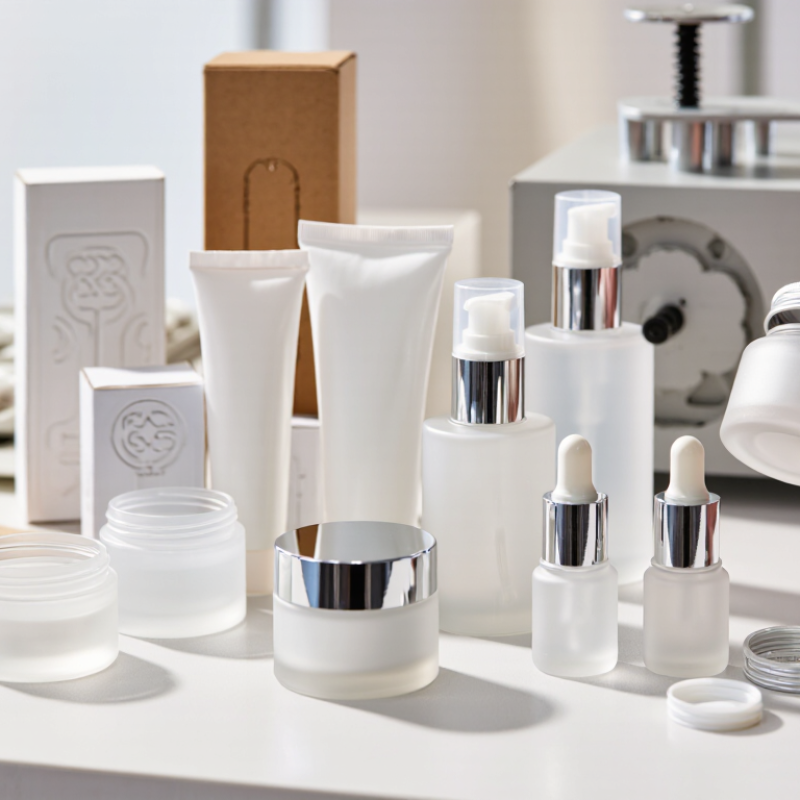
What Cosmetic Packaging Suppliers in China Produce
Cosmetic packaging suppliers in China produce containers and components for skincare, makeup, and personal-care products. Depending on their equipment, they may make glass bottles, plastic jars, squeeze tubes, compact cases, and closures. Some also manufacture pumps, droppers, and airless containers. Small details matter. A pump must dispense smoothly, while a jar lid should close securely without cross-threading.
Production often combines molding, decoration, and assembly. Suppliers may offer screen printing, hot stamping, labels, or color matching. They can also develop custom molds, though new tooling adds time and cost. For a serum bottle, for example, the package may include a glass body, a dropper assembly, and a fitted cap. Each part needs to align and function together.
Reliable production depends on more than appearance. Buyers typically review samples, dimensions, material specifications, and compatibility with the intended formula. Testing takes time. A finish that looks even under showroom lighting may show scratches after handling, so inspection conditions matter. Packaging choices also involve trade-offs: heavier glass can feel premium, but adds shipping weight. Not every supplier offers the same materials, machinery, or quality controls, so capabilities should be confirmed for each project.
How China’s Cosmetics Packaging Supply Chain Is Structured
China’s cosmetics packaging supply chain is layered, not factory-to-bottle simple. Upstream suppliers make resin, glass, aluminum, pumps, caps, and paperboard. Component makers then mold, coat, print, and assemble these parts. Filling and packaging factories coordinate compatibility tests, production schedules, and final inspection. Small details matter: a pump can clog, or a cap may loosen after transport.
The National Bureau of Statistics reported 74.885 million tonnes of plastic products produced in China in 2023. This broad figure is not cosmetics-specific, but it shows the scale of the country’s plastics manufacturing base. The China Packaging Federation also reported 1.15 trillion yuan in operating revenue for packaging firms above designated size in 2023. These figures describe industrial capacity, not supplier quality. Buyers still need to check material specifications, sample consistency, and production controls.
In practice, suppliers often specialize: one factory makes molded jars, another supplies pumps, and a third handles surface decoration. Nearby partners can shorten lead times, though extra handoffs may create defects or delays. That trade-off is easy to miss. A useful supplier review should trace who makes each component, where it is inspected, and how changes are approved. Public industry data rarely separates cosmetics packaging from other packaging, so precise market-share claims deserve caution.
What Sets Leading Chinese Suppliers Apart
Leading Chinese cosmetics packaging suppliers stand out less through catalog size than through how well they turn a brief into a repeatable component. A capable partner asks about formula viscosity, filling temperature, and line speed before recommending a bottle or pump. Small checks matter. Ask for dimensional drawings, material specifications, and closure samples made with production tooling. A pump may look right yet dispense unevenly after repeated use. That difference appears on the filling line, not in a product photo.
Reliable suppliers document quality checks from sampling through shipment inspection. Request test records for leakage, drop resistance, color consistency, and cap torque, with acceptance limits stated clearly. Details matter. Good discussions cover realistic lead times, mold ownership, order quantities, and corrective actions. Suppliers should explain which tests they perform in-house and which rely on outside labs.
No supplier is perfect. A sample can look excellent while production varies slightly in shade or fit, so approve a reference sample and inspect early production runs. A frank discussion of a failed test can reveal more than a glossy brochure.
Major Cosmetics Packaging Suppliers in China
Major Cosmetics Packaging Suppliers in China include manufacturers of glass bottles, plastic jars, squeeze tubes, compact cases, and dispensing pumps. Many operate in Guangdong, Zhejiang, and Jiangsu, where buyers can compare decoration, mold-making, and assembly capabilities. The strongest fit depends on the product: glass suits heavier fragrances, while airless pumps help limit exposure to air. Supplier labels can be misleading, though; some factories outsource printing or component assembly.
Market demand makes careful evaluation important. Grand View Research estimated the global cosmetics packaging market at about USD 34.3 billion in 2023, with continued growth projected through 2030. This is a global estimate, not a measure of China’s supplier output. Request recent test records, material specifications, and samples from the actual production line. Check whether color, pump dosage, and closure fit remain consistent across batches. A polished sample is not proof of stable mass production.
Tips: Ask for a small pilot run. Test leakage after transport simulation, and record the results. Also confirm who controls the mold. It sounds minor. It can become costly.
How to Evaluate and Verify a Potential Supplier
Evaluating a cosmetics packaging supplier takes more than comparing quotations. Ask for the factory address, production scope, quality procedures, and recent inspection records. Then match the paperwork to the actual site and equipment. Photos can mislead. If possible, arrange a live factory audit and speak with the staff responsible for quality control.
Test physical samples with the intended product, not just water. Check fit, leakage, dispensing consistency, decoration durability, and how the package performs after transport simulation. Keep measurements and results for each sample batch. Request material specifications and traceability records, then verify any sustainability claims through supporting documents or independent testing. The OECD’s 2022 Global Plastics Outlook estimates that only 9% of plastic waste was recycled in 2019. That figure is a useful reason to scrutinize recycled-content claims rather than accept a label at face value.
Review certificates carefully: confirm their issuing organization, validity, and scope, and check whether they cover the manufacturing site you plan to use. Ask how the supplier handles rejected batches and corrective actions. Test the sample. A polished presentation is reassuring, but it cannot replace repeatable production evidence. I would still leave room for doubt until pilot orders show that quality remains consistent at scale.
How to Evaluate and Verify a Cosmetics Packaging Supplier
Suggested evaluation weighting (%) for comparing potential suppliers. This is a practical assessment framework, not a market ranking or survey; apply it to evidence verified during your own review.
Check certificate validity and scope with the issuing body, review batch traceability and quality records, and verify production capacity through an audit. Request relevant packaging test reports and material documentation, then confirm lead times, minimum order quantities, and change-control processes in writing.
