
Choosing a supplier for Freeze Dried Dog Food involves more than comparing prices or attractive product photos. Global buyers need to examine ingredient sourcing, processing controls, product specifications, and the supplier’s ability to communicate clearly. A reliable partner should provide current documentation, explain how batches are checked, and answer practical questions about storage and shelf life. Ask for a sample, then review its texture, aroma, packaging, and feeding guidance before discussing larger orders.
Details matter. A clear ingredient list and consistent product size can make quality reviews easier. Buyers should also confirm minimum order quantities, production capacity, packaging options, lead times, and shipping arrangements. Requirements can differ by destination, so verify applicable import and labeling rules with qualified local professionals rather than relying on a supplier’s general assurances. Request relevant certificates and test reports, and check that they match the product and production site being offered.
This guide considers suppliers through these practical questions, helping buyers compare capabilities without treating marketing claims as proof. No checklist is perfect. A polished brochure cannot replace responsive communication or verifiable records, and a low quotation may leave important costs unclear. Careful checks take time, but they can reveal whether a supplier is suited to a long-term business relationship—or simply looks convincing at first glance.
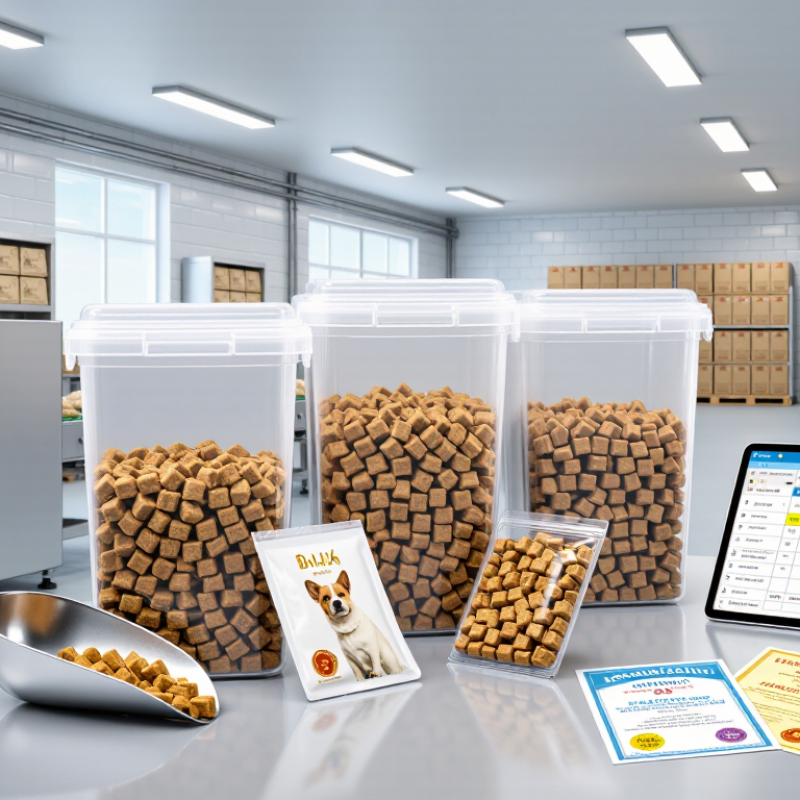
Freeze-dried dog food is made by freezing ingredients, then removing ice under low pressure. The process preserves a light, porous texture and reduces moisture, so pieces can look like small, dry cubes. Many recipes are rehydrated with water before serving. Freeze-drying alone does not prove a food is nutritionally complete or free from pathogens; buyers should check the product’s nutrition statement and testing records.
The global market is growing, but estimates depend on how reports define freeze-dried food. Grand View Research estimated the market at about US$1.5 billion in 2022 and forecast an 8.4% compound annual growth rate from 2023 to 2030. These are projections, not audited sales. For global buyers, demand is only part of the picture: freight costs, moisture-resistant packaging, ingredient traceability, and clear feeding directions can affect a product’s viability across markets.
Tips: Ask suppliers for batch-specific test results, ingredient-origin documents, and evidence that the recipe meets recognized nutritional guidelines. Check how quickly the food softens in a bowl; some pieces stay firm in the center. A small detail, but worth checking. Packaging claims can sound reassuring, yet they do not replace independent testing.
Supplier categories and market characteristics are presented without company or brand names. Capabilities vary by facility and should be confirmed directly with each prospective supplier.
| Supplier Category | Common Sourcing Regions | Typical Capabilities | Potential Buyer Fit | Key Checks Before Purchase | Global Market Considerations |
|---|---|---|---|---|---|
| Specialist freeze-dried pet food manufacturers | North America, Europe, Oceania, and parts of Asia | May produce complete diets, single-protein products, treats, or toppers using freeze-drying; product range depends on the facility. | Importers and retailers seeking finished products or a focused freeze-dried range. | Confirm product classification, ingredient traceability, manufacturing controls, shelf-life evidence, and export eligibility for the destination market. | Import rules for animal-origin ingredients differ by country and can depend on ingredient species, processing, and country of origin. |
| Pet food contract manufacturers (OEM/ODM) | Available in multiple established pet food manufacturing regions worldwide | May offer custom recipes, private-label production, packaging options, or product development; not every facility has freeze-drying equipment. | Brands, distributors, and retailers that need customized products or private-label production. | Verify freeze-drying is performed at the approved site, review minimum order quantities, recipe ownership, production lead times, and quality agreements. | Custom formulations may require additional review for local labeling, ingredient permissions, and nutritional adequacy requirements. |
| Pet-food-grade meat and ingredient processors | Regions with established livestock, poultry, fish, or pet food processing industries | May supply raw or prepared animal ingredients to pet food manufacturers; some facilities may also provide further processing. | Manufacturers seeking traceable meat, poultry, fish, or organ ingredients for freeze-dried products. | Check species and origin records, ingredient specifications, microbiological controls, handling practices, and whether the material is approved for the intended market. | Animal by-product definitions and import controls vary across jurisdictions; human-food status alone does not establish pet-food export eligibility. |
| Regional pet food exporters and trading suppliers | Export hubs serving North America, Europe, Asia-Pacific, and other importing markets | May coordinate sourcing, documentation, packaging, and shipment of finished goods from one or more manufacturing sites. | Buyers needing export coordination, consolidated shipments, or access to products from multiple producers. | Identify the actual manufacturing site, confirm the exporter’s role, request batch-level documents, and verify who is responsible for regulatory compliance. | Trade terms, customs documentation, freight conditions, and border inspection requirements can affect landed cost and delivery time. |
| Freeze-dried treat and topper producers | Manufacturing locations vary by ingredient supply and target market | Often focus on treats or meal toppers rather than nutritionally complete diets; formats may include pieces, powders, or chunks. | Retailers and distributors adding complementary products to an existing pet food assortment. | Confirm whether the product is labeled as a treat, complementary feed, or complete diet, and check feeding directions and intended use. | Label categories and permitted claims differ between markets; “freeze-dried” does not by itself indicate nutritional completeness. |
| Freeze-dried complete-diet producers | Found in several pet food manufacturing markets; facility capability is product-specific | May formulate products intended to provide a complete diet when fed as directed; recipes can differ in species, life stage, and nutrient profile. | Buyers looking for meal-format products rather than treats or supplemental toppers. | Request the nutritional analysis, feeding guide, formulation basis, applicable adequacy statement, and evidence supporting the product’s intended life stage. | “Complete” and “balanced” claims must be assessed against the rules and recognized standards applicable in the sales market. |
| All supplier categories | Global supply chains may involve separate ingredient, processing, packaging, and export locations | Freeze-drying removes water from frozen material under reduced pressure; the finished product is low in moisture but is not necessarily sterile. | All international buyers comparing product quality, safety controls, and supply reliability. | Review hazard controls, pathogen-reduction measures where applicable, packaging barrier properties, storage instructions, batch traceability, and recall procedures. | Low moisture can limit microbial growth, but it does not eliminate all pathogens. Safe handling and destination-specific compliance remain important. |