
Choosing a reliable Linen Maxi Dress manufacturer in China takes more than comparing catalog photos. Fabric can look airy on a screen yet feel stiff or heavy in person. A sample reveals the difference. This guide introduces manufacturers and explains how to assess their capabilities, communication, and production consistency.
Look closely at linen weight, weave, stitching, and finishing. Ask whether the fabric is pure linen or a blend, and request clear details about shrinkage, color matching, and care instructions. Check practical design features too: pocket placement, lining, adjustable straps, and how the skirt hangs when walking. Small details matter. A beautiful sample is useful, but it does not guarantee every bulk order will match.
The sections ahead can help buyers compare product ranges, customization options, minimum order quantities, sampling processes, and typical production timelines. Treat supplier claims as starting points, not proof. Request recent product photos, written specifications, and a pre-production sample where possible. If an answer feels vague, ask again. That can be awkward, but it is better than discovering a fabric or fit problem after production begins. No manufacturer is right for every brand. The best choice depends on your target customer, budget, order size, and quality expectations. Use the information here to build a shortlist, then verify the details directly before making a decision.
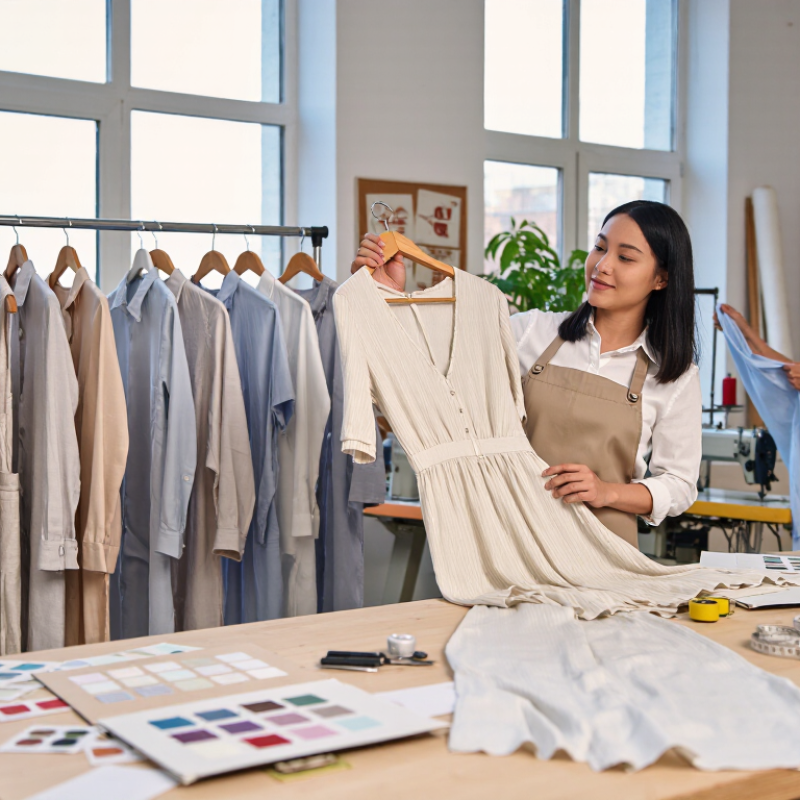
Understanding linen maxi dress manufacturing in China starts with the fabric, not the sewing line. Linen is made from flax, and fiber origin, retting, spinning, and finishing can vary between suppliers. Textile Exchange’s Materials Market Report 2024 estimates that global fiber production reached 124 million tonnes in 2023, across all fiber types. The figure is not linen-specific, but it shows why buyers should request material-level records rather than rely on broad sustainability claims.
For a maxi dress, check fabric weight, weave density, shrinkage, and colorfastness before approving bulk production. Ask for a pre-production sample, then compare its measurements and drape with the approved specification. A lightweight linen may feel airy, yet turn sheer in strong daylight. Small details matter. Confirm whether the fabric is washed or softened, since finishing can affect texture, shade, and final measurements. Request test results and clarify who performed each test; a document without a clear method is weak evidence.
Factories may coordinate fabric sourcing, cutting, sewing, and finishing, but these steps can involve separate suppliers. Ask for the production location of each stage, capacity, lead time, and defect-handling process. Inspect seam allowance, hem consistency, pocket placement, and how the dress hangs when worn. Linen naturally creases; that is not a defect by itself. Still, I would not treat “natural fabric” as proof of good quality. A clear specification and a reviewed sample offer more practical assurance.
Best Linen Maxi Dress Manufacturers in China?
Key Criteria for Assessing Manufacturer Quality and Expertise
A capable manufacturer should explain how it controls fabric, fit, and finishing—not just show polished samples. Textile Exchange’s Materials Market Report 2024 estimates that global fiber production reached 124 million tonnes in 2023, with polyester making up 57%. This is not linen-specific data, but it highlights why buyers should verify fiber content instead of relying on vague product descriptions. Ask for the linen’s source, fabric weight, weave, and a sample cut from the same production lot. Details matter.
Evaluate the sample like a garment in use. Check whether the maxi dress hangs evenly, the side seams twist, or the fabric becomes noticeably shorter after washing. Request documented shrinkage, colorfastness, and seam-strength results from recognized testing methods. A factory’s quality plan should identify who checks fabric before cutting and how defects are recorded during sewing. Ask about capacity, lead times, minimum order quantities, and any subcontracted steps. I would not treat one perfect sample as proof. Even an experienced factory can miss a detail when production scales, so compare pre-production samples with finished goods and keep written specifications for each order.
China’s linen-dress supply chain often starts far from the sewing floor. Mills source flax fibre or yarn from domestic and overseas markets, then spin, weave, dye, and finish the fabric. The Alliance for European Flax-Linen & Hemp’s 2023 industry benchmark reports about 220,000 hectares of European flax cultivation, supplying roughly 80% of the world’s long flax fibre. This figure concerns long fibre, not all linen inputs.
In China, fabric mills and garment factories may be located in different provinces. A buyer might approve a washed-linen swatch, while the mill checks yarn count, fabric weight, and shrinkage. Cut-and-sew teams then make samples, grade patterns, and prepare production. Small details matter: linen creases easily, and shade differences can appear between dye lots. Inspect both fabric and finished garments.
The weak point is traceability. A supplier may know its fabric mill but have limited records about the fibre’s origin. Ask for supplier details, test reports, and a clear account of each production stage. Textile Exchange’s Materials Market Report 2024 puts global fibre production at 124 million tonnes in 2023, showing how broad the sourcing landscape is. That total covers many fibres, not linen alone. Data can be imperfect, too; verify claims against current mill documents.
A practical, brand-neutral overview of the main production stages and checks to use when evaluating a linen maxi dress supplier. Capabilities and sourcing arrangements vary by factory.
| Supply-chain stage | What happens | What to verify | Useful buyer evidence |
|---|---|---|---|
| Flax fiber and yarn sourcing | Flax is processed into fibers, which are spun into linen yarn. A garment supplier may source yarn or finished fabric from separate upstream mills; the fiber origin can differ from the garment’s country of manufacture. | Whether the fabric is 100% linen or a blend, and whether the stated fiber content is supported by documentation or testing. | Fiber-content declaration, fabric specification, and traceability records where available. |
| Fabric construction | A mill converts yarn into fabric, commonly through weaving for woven linen dresses. Fabric weight, weave, yarn characteristics, and finishing affect drape, opacity, hand feel, and crease behavior. | Confirm the actual fabric construction and weight on the approved sample; do not rely on a “linen” description alone. | Swatches, a written fabric specification, and a signed or otherwise clearly approved reference sample. |
| Dyeing and finishing | Fabric may be dyed, washed, softened, or otherwise finished before cutting. These processes can affect shade, shrinkage, texture, and the natural appearance of linen. | Shade consistency, colorfastness, dimensional change after washing, and whether the production finish matches the approved sample. | Lab-dip or bulk shade approval, wash-test results, and a pre-production sample in the intended fabric and finish. |
| Pattern and sample development | The factory develops patterns and samples for the maxi dress, including length, neckline, sleeves, waist shaping, lining, closures, and finishing details. | Fit, measurements, seam construction, transparency, and how the garment hangs in the chosen fabric. | Measurement chart, comments on each sample round, and a final approved pre-production sample. |
| Cutting and sewing | Fabric is spread, pattern pieces are cut, and garment panels are assembled. Cutting plans may account for fabric width, pattern direction, defects, and matching requirements. | Panel alignment, seam quality, hem consistency, stitch security, and whether production follows the approved construction details. | Production sample, in-line inspection records, and clear workmanship requirements in the purchase specification. |
| Garment quality control | Finished dresses are checked against agreed measurements and appearance requirements. Inspection may take place during production and before shipment. | Measurement tolerances, visible defects, shade variation, loose threads, labeling, and packing accuracy. | A written inspection checklist, inspection photos or report, and agreed defect and measurement criteria. |
| Finishing and packing | Garments are pressed or finished as specified, labeled, folded or hung, and packed for shipment. Linen’s natural creasing should be considered when choosing presentation and packing methods. | Care-label accuracy, packaging specifications, carton marks, and whether packing protects garments during transport. | Approved label artwork, packing instructions, and a packing-list or carton-marking review. |
| Supplier assessment | A supplier may manage some stages directly and subcontract others. A capable garment factory is not necessarily the fabric mill, so the production chain should be clarified before ordering. | Who controls fabric purchasing, sampling, sewing, inspection, and subcontracting; whether sample and bulk production use the same approved materials. | A process map, facility or subcontractor disclosure where applicable, production schedule, and written confirmation of material controls. |
Buyer note: “Linen” is a fiber description, not a guarantee of a particular fabric weight, weave, finish, or place of origin. Put the required fiber composition, fabric specification, measurements, testing expectations, and approved sample references in writing.
When comparing linen maxi dress manufacturers in China, verify the workshop behind the quotation. Ask for a live video call that shows cutting tables, sewing lines, and finished garments—not only a prepared showroom. Request recent references for similar linen styles, then ask about order size, production capacity, and typical lead times. A polished presentation is useful, but it proves little on its own.
Order a sample made from the proposed fabric. Check the garment after washing: note shrinkage, color changes, seam puckering, and how the skirt hangs. Ask for fabric composition and weight in writing, and compare those details with the sample. Small differences matter. A dress that looks airy in photos may feel heavy in summer. Record your measurements and comments, so each factory responds to the same requirements.
Compare quotations line by line, including fabric, trims, packaging, sampling charges, and shipping terms. Ask who handles quality checks and what happens when a batch misses agreed measurements. Keep communication in writing. A factory’s clear, specific answers are more useful than a low price. Remote checks still have limits; even a video call cannot reveal every production problem. That uncertainty is worth admitting.
A practical buyer’s framework for comparing potential manufacturers
How to use it: Treat these suggested weights as a planning framework, not market statistics. Verify business identity and export experience, assess linen garment capabilities, evaluate a sample against your specifications, review relevant compliance evidence, and confirm communication and contract terms. Adjust the weights to fit your order and requirements.
Choosing a manufacturer for your production requirements means looking beyond a low sample price. Ask whether the factory regularly handles linen and can explain how it manages fabric variation. Linen may soften and shrink after washing, so request pre-wash guidance and agree on measurement tolerances before bulk production. A useful sample should show the actual weight, color, stitching, and drape—not just a similar fabric. Check the hem on a full-length dress. It should hang evenly on a form and remain practical for walking.
Production details matter. Confirm minimum order quantities, sample fees, lead times, and the process for approving fabric and color. Ask how the team checks seams, waist placement, and size grading across a production run. Clear answers are reassuring. Vague promises are not. If possible, review a measurement sheet and a finished sample before confirming an order. Keep written records of revisions, especially changes to length, lining, or pocket placement. These details can be easy to overlook.
A smaller order may reduce risk, but it can also raise the cost per piece. There is no perfect supplier for every project. One thing I would question is a factory that claims every fabric behaves the same. It doesn’t. Compare several manufacturers against your target price, quality level, and delivery schedule, then choose the one whose process you can verify.