
Top 10 Ride On Toy Types for Global Buyers

A RIDE ON TOY can look simple on a product page: four wheels, a bright shell, and a small seat. For global buyers, the real choice is more specific. A toddler’s push-powered ride-on serves a different need from a battery-powered car, a rocking animal, or a pedal go-kart. Buyers must compare age guidance, indoor or outdoor use, weight limits, assembly, storage, and replacement-part support. Small details matter. A wide turning circle may frustrate families in a compact home, while hard wheels can feel rough on uneven paving.

Market evidence offers context, but it needs careful reading. Circana’s 2024 year-end review reported 1% value growth in toy sales across 12 tracked markets. That figure describes the wider toy industry, not ride-on toys alone. That gap matters. It signals market activity without proving demand for any specific vehicle type. For dependable sourcing, compare supplier specifications with documented product testing and clear age recommendations. Ask how materials, battery options, packaging, and spare parts vary by destination. Local standards and buyer requirements also differ; verify them for each market rather than assume one specification fits all.

This guide introduces ten ride-on toy types, from balance bikes and scooters to electric cars and animal-shaped rockers. Each offers a different mix of movement, play style, floor space, and maintenance. Some categories overlap, and product names can be inconsistent. That is worth remembering. Use the list as a practical starting point, then match each type to the intended age group, sales channel, and customer needs.
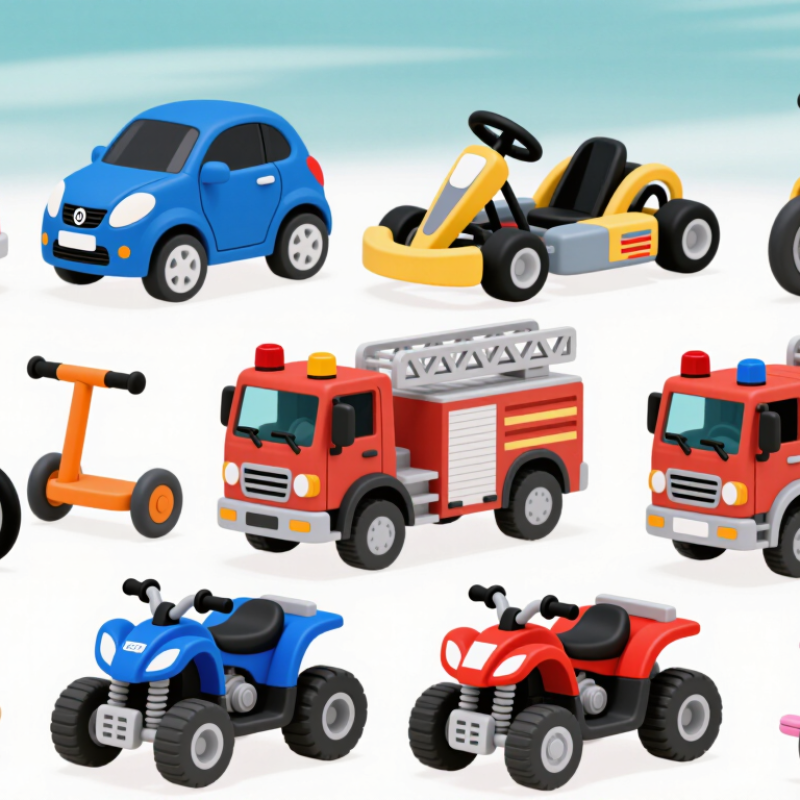
Top 10 Ride On Toy Types for Global Buyers

Ride-On Toys Classified by Power Source and Movement

Ride-on toys are easier to compare when buyers separate their power source from their movement. Foot-to-floor models use a child’s feet to push and steer. Pedal toys transfer leg power through pedals, often turning a simple ride into active play. Battery-powered models move with an electric motor and usually use a hand or foot control. Some toys are pushed by an adult, while others let children propel themselves. Small differences matter.

Tips: Check the stated age and weight limits, control layout, and surface guidance. A battery model may travel differently on smooth indoor flooring than on rough paving. For pedal toys, look closely at seat adjustment and how easily a child can reach the pedals. Ask suppliers to clarify unclear specifications before comparing prices.

Movement style adds another useful distinction. Some ride-ons roll freely, while others follow a fixed path or use a rocking motion. A toy can also combine features, such as pedals with a small assist motor, so product categories are not always neat. That can make sourcing comparisons frustrating. Request photos of the underside and controls, plus clear details on charging, assembly, and replacement parts. A tidy listing is helpful, but it does not answer every practical question.

Battery-Powered Cars, Motorcycles, and Utility Vehicles

Battery-powered ride-ons serve different buying needs: cars suit smooth driveways, motorcycles save storage space, and utility vehicles encourage pretend hauling. Global buyers should compare age fit, seat width, turning radius, speed controls, battery access, charger compatibility, and carton dimensions—not just motor voltage. A child-sized pickup with a shallow cargo bed may look appealing in photos but disappoint on grass. Test products on the surfaces customers are likely to use.

Market data provides context, not a direct forecast. Grand View Research valued the global toys market at USD 108.7 billion in 2023 and projected a 4.3% compound annual growth rate through 2030.

Circana reported that toy sales across 12 tracked markets fell 7% in 2023, while average selling prices rose 1%. These figures cover toys broadly, not ride-ons specifically; treating them as ride-on demand would be a mistake.

A missed detail.

Cars need predictable steering and simple charging; motorcycles trade cabin protection for narrower footprints, while utility models raise questions about load limits and traction. Buyers should request runtime tests under realistic rider weights and repeated-charge checks. A glossy specification sheet cannot reveal weak connectors or an overheating charger. Published market data rarely separates ride-on styles or regional usage, so that uncertainty deserves honest discussion.

Pedal-Powered, Foot-Powered, and Balance Ride-Ons

Ride-on toys differ in how children move, steer, and build confidence. Pedal-powered models use a crank and pedals, making them suitable for children who can coordinate leg movement and steering. Buyers should check pedal reach, seat adjustment, and whether the chain or gears have a secure cover. Fit matters. A child’s feet should reach the pedals without stretching.

Foot-powered ride-ons let children push against the ground with their feet. Low seats and wide wheels can help beginners feel stable on smooth, level surfaces. Balance ride-ons, including simple balance bikes, encourage children to steer while shifting their weight. Check handlebar reach, wheel size, grip texture, and frame weight; a heavy toy can be tiring to lift or turn. Product charts make these types look neatly separate, but real children develop at different speeds. That can make choosing less straightforward than it seems.

Tips: Match the toy to the child’s height and coordination, not age alone. Check wheel attachment, smooth edges, and clear assembly instructions. Test steering in a safe, open area, and supervise play. A brief fit check can prevent a frustrating first ride.

Top 10 Ride On Toy Types for Global Buyers - Pedal-Powered, Foot-Powered, and Balance Ride-Ons

Ride-On Type Power Source Commonly Marketed Age Range Typical Design Features Suitable Surfaces Key Buying Considerations
Pedal Tricycle Pedals, usually with a front-wheel drive About 2–5 years Three wheels, a low seat, handlebars, and a stable riding position Flat, firm outdoor paths and smooth indoor floors Check seat and handlebar fit, pedal reach, wheel construction, and any stated weight limit.
Pedal Go-Kart Pedals connected to a crank or drive mechanism About 3–8 years, with size-specific models Four-wheel frame, steering wheel, and a seated pedal position Firm, relatively smooth surfaces such as paved paths Confirm the rider’s fit, braking method, turning clearance, and whether the model is intended for outdoor use.
Pedal Tractor Pedals, often driving the rear wheels About 2–7 years, depending on frame size Tractor-style body and steering; some versions accommodate compatible trailers or attachments Firm grass, compacted ground, and paved areas, subject to the product design Check overall dimensions, pedal reach, ground clearance, and whether accessories are included or sold separately.
Foot-to-Floor Ride-On Car Child pushes against the ground with their feet About 1–3 years Low seat, enclosed or molded body, steering wheel, and foot contact with the ground Smooth indoor floors and level, paved outdoor areas Look for a stable base, smooth edges, appropriate seat height, and clear guidance for younger riders.
Push-Along Ride-On Caregiver pushes; some designs can later be foot-powered About 9 months–3 years, depending on configuration Seat with a caregiver handle; some models include a footrest or removable handle Level, smooth surfaces suitable for the wheels Check that the handle is secure, the footrest suits the child’s stage, and the design is used only as instructed.
Ride-On Scooter Child pushes along with one or both feet About 2–5 years Low platform or seat, steering column, and typically three or four wheels Smooth, flat paths and indoor floors where permitted Review steering stability, platform height, wheel layout, and any recommended protective equipment.
Wiggle Car Rider moves the steering wheel side to side; no pedals or battery required Often about 3 years and up Low seat and caster-style front wheels that respond to steering movement Hard, smooth, level surfaces Check the stated age and weight limits, required clearance, and whether the riding surface is suitable.
Balance Bike Child walks or pushes off with their feet Often about 18 months–5 years, depending on frame size Two wheels, no pedals, and a seat low enough for the rider to place their feet on the ground Level paths and other firm, smooth surfaces Prioritize adjustable seat height, rider fit, manageable weight, and a helmet that fits properly.
Three-Wheel Balance Bike Child pushes off with their feet Often about 1–3 years Low seat and three-wheel layout designed to provide additional stationary stability Flat, smooth floors and paved areas Check the wheel arrangement, seat height, steering range, and product-specific age and weight guidance.
Foot-Powered Ride-On Animal or Character Child pushes against the ground with their feet Commonly about 1–4 years, varying by design Molded seat and body with wheels; some designs include a handle or footrests Flat indoor floors and smooth, level outdoor areas Assess stability, wheel coverage, accessible moving parts, seat fit, and the manufacturer’s use instructions.

Note: Age ranges are general category examples, not universal safety ratings. Actual age and weight limits, features, and suitable surfaces vary by product; always follow the manufacturer’s instructions and supervise children while riding.

Push, Rocking, and Animal-Shaped Ride-On Toys

Push ride-on toys suit children who enjoy moving with their feet on smooth floors or paved paths. Buyers should check seat height, handle placement, wheel width, and the stated age and weight limits. A broad wheelbase can help reduce tipping, but it does not replace adult supervision. Small details matter.

Rocking toys invite slower play. Look for a stable base with rounded edges and grips that are easy for small hands to hold. A gentle rocking range is useful, while loose joints or sharp seams deserve a closer inspection. Ask suppliers how they check assembly consistency across production batches; one sample may not reveal every issue.

Animal-shaped ride-ons add character through ears, tails, and molded faces. These features should be firmly attached and free from detachable small parts, especially for younger users. Still, a cute face can distract from practical checks. Are the seams smooth? Does the toy stay steady on the intended surface? For global orders, confirm material details, packaging dimensions, and test documents against the destination market’s requirements. Humidity and long shipping times can affect packaging, too. Not every design travels equally well.

Comparing Ride-On Types for Global Markets

Ride-on toys vary widely in how children move and where the toys work best. Foot-to-floor models are simple to operate and suit smooth indoor floors, but small wheels can struggle on rough paths. Push ride-ons give younger children support from an adult. They may be less appealing once a child wants to move independently. Balance-style ride-ons encourage steering practice, though fit matters: a seat that is too high can make mounting awkward. Small details matter.

Pedal models need more space and coordination. They can suit outdoor play, but their pedals and wider frames add bulk during shipping and storage. Battery-powered ride-ons offer assisted movement and clear play value. Buyers should check charging needs, run time, and the weight of the vehicle, not just its appearance. A heavy toy can be difficult to move between rooms. Keep in mind that performance claims can vary with the child’s weight and the surface.

For global markets, compare intended age range, wheel size, packaging dimensions, and the surfaces common in customers’ homes. A compact indoor model may fit apartment living, while a sturdy wheeled design may better suit outdoor use. Regional preferences are not always predictable. Sample testing helps reveal issues that a product sheet misses, such as hard-to-reach controls or a seat that feels slippery. It takes time. But ignoring these details can lead to poor fit.

Top 10 Ride-On Toy Types for Global Buyers

Typical wheel counts across common ride-on toy categories

Wheel count is a basic design comparison, not a measure of quality or suitability. Counts shown represent common configurations; individual models may differ. Buyers should check product specifications and age guidance for each model.

Article Source: