| Photoelectric Smoke Alarm | Uses a light source and sensor to identify smoke particles that scatter light inside the sensing chamber. | Generally provides stronger protection against slow, smoldering fires that produce visible smoke before flames develop. | Bedrooms, hallways, living rooms, and areas near upholstered furniture or mattresses. | Usually produces fewer nuisance alarms from normal cooking than ionization designs and is well suited to common residential fire scenarios. | Steam, dust, insects, or heavy cooking smoke can still cause alarms. Regular cleaning and testing are required. |
| Ionization Smoke Alarm | Uses a small ionization chamber to detect changes caused by smoke particles entering the chamber. | Generally responds more quickly to fast-flaming fires that produce smaller combustion particles. | Open areas away from kitchens, bathrooms, dusty workshops, and strong air currents. | Compact and commonly available as a lower-cost sensing option. | Can be more prone to nuisance alarms from cooking. It should not be installed too close to cooking appliances, and its radioactive sensing source must be disposed of according to local rules. |
| Dual-Sensor Smoke Alarm | Combines photoelectric and ionization sensing in one alarm. | Designed to detect both smoldering and fast-flaming fire characteristics. | General-purpose residential coverage where one alarm is intended to provide broader fire detection. | Offers two sensing methods in a single device and can reduce the need to choose between the two technologies. | It may still produce nuisance alarms if installed near cooking or steam. Correct placement remains essential. |
| Aspirating Smoke Detection System | Uses a fan to draw air through sampling pipes to a highly sensitive detection chamber. | Can identify very small amounts of smoke at an early stage, depending on system design and settings. | Data centers, archives, telecommunications rooms, industrial facilities, and other high-value or difficult-to-access spaces. | Provides continuous air sampling, configurable sensitivity, and centralized monitoring for larger or mission-critical spaces. | More complex and costly than standard residential alarms; installation, airflow design, and professional maintenance are important. |
| Heat Alarm | Detects a fixed high temperature or a rapid rise in temperature rather than smoke. | Responds when heat reaches the alarm threshold; it is not intended to replace smoke alarms in normal sleeping areas. | Kitchens, garages, attics, dusty areas, and locations where smoke, fumes, or dust could cause frequent nuisance alarms. | More resistant to nuisance alarms caused by cooking fumes, dust, exhaust, and humidity. | Usually reacts later than a smoke alarm because it must detect significant heat. It should be used as a supplementary device where appropriate. |
| Combination Smoke and Carbon Monoxide Alarm | Combines a smoke sensor with a separate carbon monoxide sensor in one housing. | Detects smoke from fire and dangerous carbon monoxide concentrations from incomplete combustion or fuel-burning equipment. | Sleeping areas, hallways outside bedrooms, and homes with fuel-burning appliances or attached garages. | Provides two types of life-safety monitoring in one device and can reduce wall or ceiling clutter. | Smoke and carbon monoxide sensors have different alarm conditions. The device must be installed according to both smoke and carbon monoxide placement requirements. |
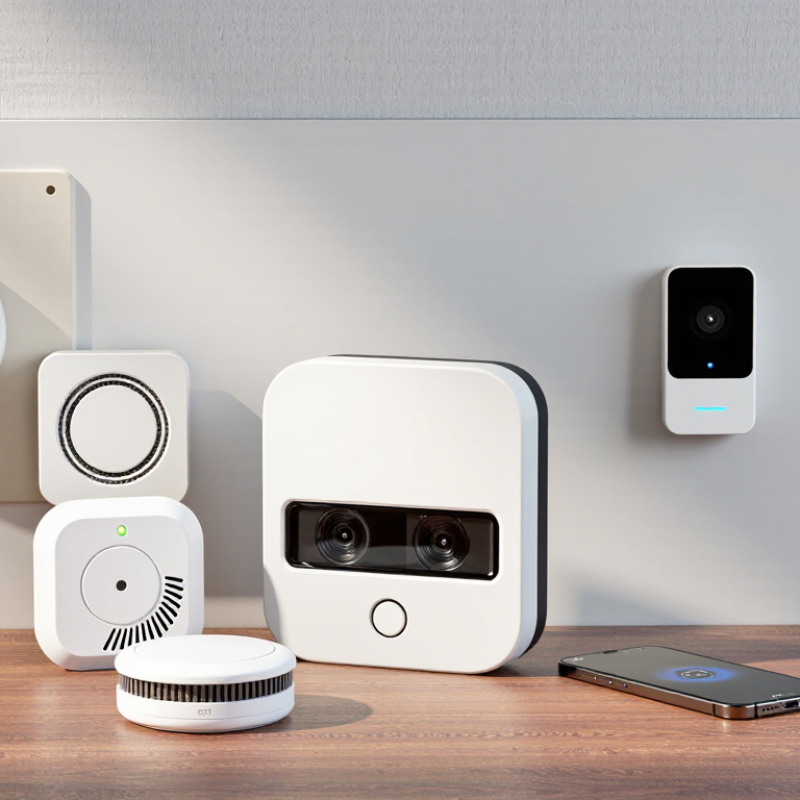
| Connected or Smart Smoke Alarm | Uses a conventional smoke-sensing method, such as photoelectric or dual-sensor technology, with wireless connectivity. | Fire response depends on the built-in sensing technology; connectivity adds remote notifications or system integration. | Homes where occupants want interconnected alarms, mobile alerts, or integration with a wider home-safety system. | May provide alarm interconnection, event notifications, self-test information, and accessibility features. | Requires reliable power and, for some functions, a working network or hub. Connectivity does not replace local audible alarms or correct installation. |