Why Choose Spunlace Nonwoven Fabric for Your Business?
Choosing the right material can shape product quality, production efficiency, and customer trust. Spunlace Nonwoven Fabric offers a practical option for businesses seeking softness, strength, and flexible performance. It is made by entangling fibers with high-pressure water jets. This process creates a fabric without traditional weaving or knitting.
Many manufacturers use it for wipes, medical textiles, personal-care products, filtration materials, and household applications. Its smooth surface feels comfortable against skin. Its absorbency can support cleaning and care products. It also cuts easily, folds neatly, and adapts to different product designs. These details matter when a factory handles thousands of units each day.
Yet material selection should not rely on attractive specifications alone. In real sourcing work, small differences in fiber blend, weight, texture, and finishing can affect performance. A fabric that works well for dry wipes may not suit a wet application. Testing remains essential. Always review technical data, sample results, and supplier consistency before large-scale purchasing.
Experienced buyers also examine production capacity, quality controls, packaging, and delivery reliability. Certifications may support confidence, but they should be verified carefully. Claims can sound impressive. Evidence matters more. Spunlace Nonwoven Fabric is not automatically the best choice for every business. However, when its properties match the product’s needs, it can provide a balanced foundation for reliable manufacturing and customer satisfaction. There is room for error. Careful evaluation reduces it.
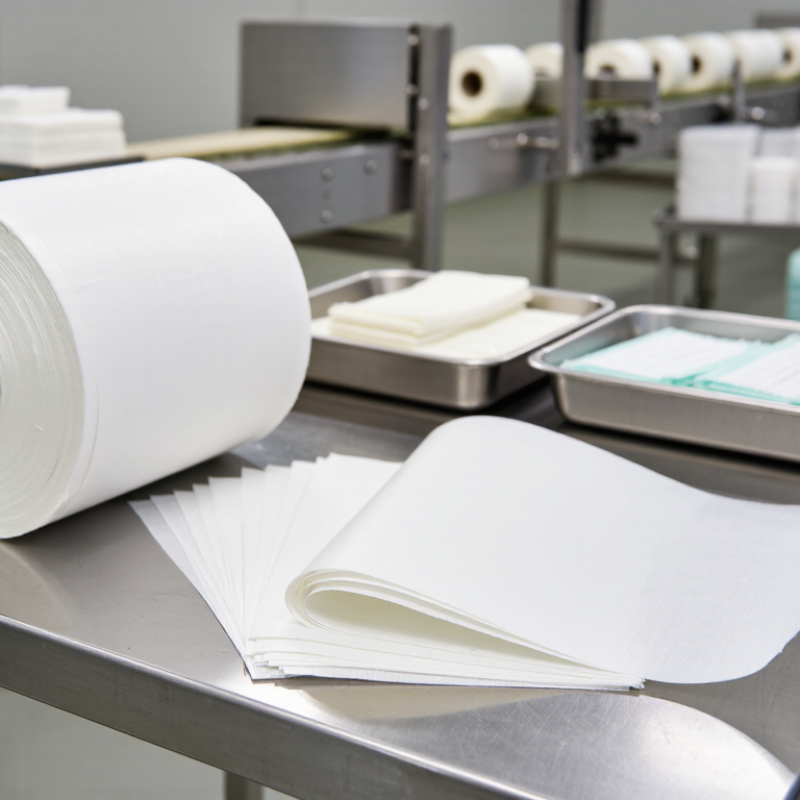
What Is Spunlace Nonwoven Fabric?
Spunlace nonwoven fabric is made by bonding loose fibers with fine, high-pressure water jets. Unlike woven cloth, it does not depend on yarns crossing over and under each other. Manufacturers lay a fiber web on a moving belt, then use water to entangle the fibers. The sheet is dried, finished, and sometimes treated for added softness or absorbency. No adhesive is normally required. Common fibers include cotton, rayon, polyester, and blended materials. Each option changes the fabric’s feel, strength, drying speed, and environmental profile. Cotton may provide a natural hand feel, while polyester often improves durability. Rayon can create a smooth, absorbent surface.
For business buyers, spunlace offers a practical balance between softness, flexibility, and production efficiency. It can be converted into wipes, medical gowns, cleaning cloths, beauty sheets, and other disposable or semi-durable products. In production, the fabric cuts cleanly and conforms well to curved surfaces. That matters when a product must feel gentle against skin or capture liquid quickly. Still, softer is not always better. A lightweight sheet may tear during use, while a dense sheet can feel stiff and cost more. Buyers should check basis weight, tensile strength, absorbency, lint level, and wet performance before approving a material. Small-scale testing is essential. Spunlace is useful, but it is not automatically the best choice for every application.
Which Industries Use Spunlace Nonwoven Fabric?
Why Choose Spunlace Nonwoven Fabric for Your Business?
Spunlace nonwoven fabric serves many industries because it feels soft, absorbs liquids, and produces little lint. High-pressure water jets entangle the fibers without traditional weaving. This creates a flexible material for wipes, pads, covers, and disposable cleaning products. In healthcare, it supports wound-care materials, patient wipes, and protective applications. Performance still depends on fiber type, weight, and finishing. One fabric cannot suit every medical task.
Which Industries Use Spunlace Nonwoven Fabric?
Personal care manufacturers use spunlace for facial wipes, makeup-removal pads, and baby-care products. Its smooth surface feels gentle against skin. Beauty salons also use it for towels, masks, and treatment sheets. Food-service businesses choose it for kitchen wipes and surface-cleaning cloths, where controlled absorbency matters. Industrial companies use stronger grades for machinery wiping, polishing, and maintenance work. Agriculture can use biodegradable variants for selected crop-protection tasks. However, moisture, storage, and disposal conditions require careful testing. We sometimes underestimate those details.
Tips: Match the fabric weight to the job. Test wet strength before large-scale purchasing. Check lint levels on glass or metal surfaces. For skin-contact products, verify softness and safety documentation. A small trial batch can reveal problems early. Cost alone is not enough.
Why Choose Spunlace Nonwoven Fabric?
Typical basis-weight ranges by industry application
Spunlace nonwoven fabric is valued for its soft hand feel, high absorbency, good wet and dry strength, low linting, and suitability for lotions, disinfectants, and other liquid formulations.
The ranges shown are typical industry specification ranges in grams per square metre (g/m²), not market-share figures. Actual basis weight depends on fiber type, bonding process, strength requirements, absorbency, and end-use design.
How Can Businesses Choose the Right Spunlace Fabric?
Why Choose Spunlace Nonwoven Fabric for Your Business?
How Can Businesses Choose the Right Spunlace Fabric?
Choosing spunlace fabric should begin with the product’s actual job. A facial wipe needs softness, low lint, and gentle skin contact. A cleaning wipe may require stronger wet performance and better absorption. For each use, compare basis weight, fiber blend, thickness, and surface texture. Small differences matter. A 45 gsm fabric feels very different from a 70 gsm sheet.
Request samples before placing a large order. Test them with the liquids, folding methods, and packaging used in production. Check absorbency time, wet tensile strength, dry tensile strength, and lint release. Measure the sheet after storage, too. Humidity can change its handling and dimensions. We once treated softness as the main priority, but the material tore during high-speed converting. That was a useful mistake.
Supplier reliability also needs careful review. Ask for current technical data, batch records, and certificates that match your market requirements. Confirm fiber origins, roll width tolerance, moisture levels, and delivery consistency. A capable supplier should explain test methods clearly, not only provide attractive numbers. Independent laboratory testing can verify important claims. Keep retained samples from each approved batch. This creates a practical reference when quality changes. No fabric is perfect. The right choice balances performance, cost, compliance, and the conditions your customers will actually face.
